Episode Summary: A complete walkthrough of the best cave churches in the Goreme Open Air Museum. Discover frescoes, monastic dining halls and the history of early Christian cave settlements in Cappadocia.
Looking for a deeper dive? Listen to our full length guide: Goreme Open Air Museum: The Complete Audio Guide.
Introduction: A Monastic Center Carved in Soft Rock
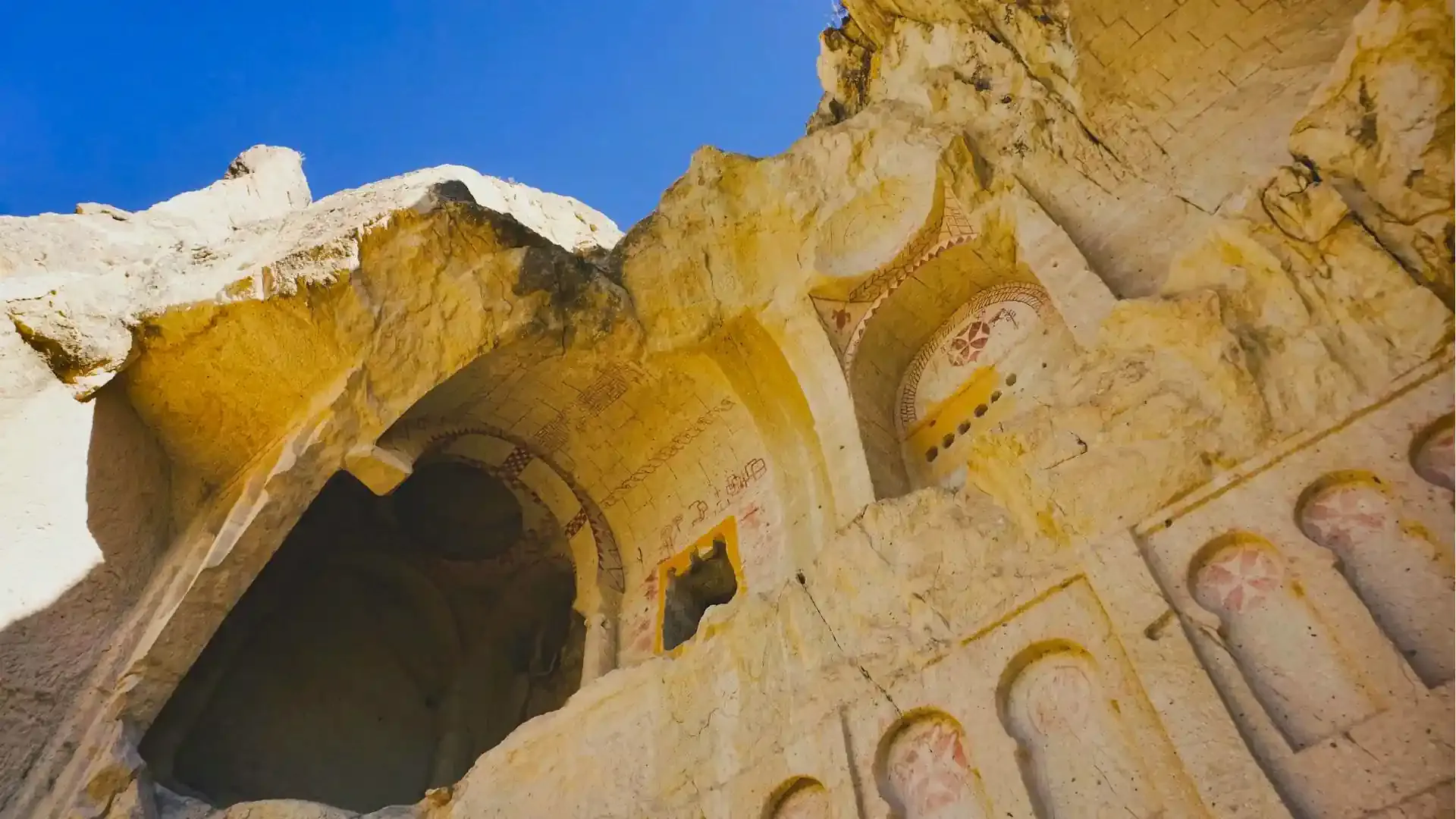
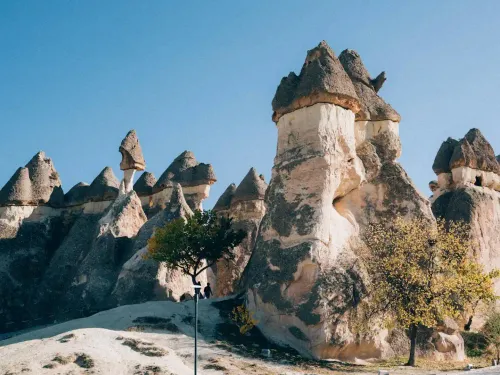
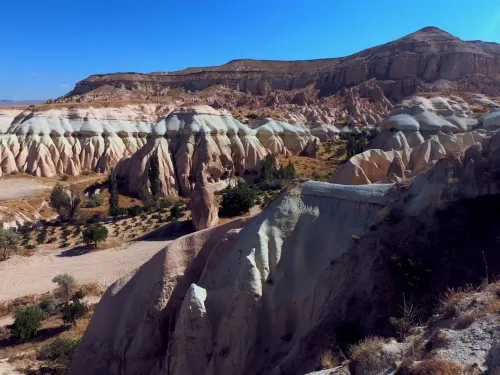
Cappadocia is an ancient region in the center of modern Turkey. It is famous for its uniquely shaped rock formations and extensive cave settlements. What makes the Goreme Open Air Museum truly unique are its cave churches and chapels.
A thousand years ago, this quiet landscape of soft volcanic rock was a bustling center of religious education. These caves housed a community built around prayer, study and monastic discipline where hundreds of monks, nuns and orphans lived.
First Impressions: The Nun’s Convent & St. Basil’s Chapel
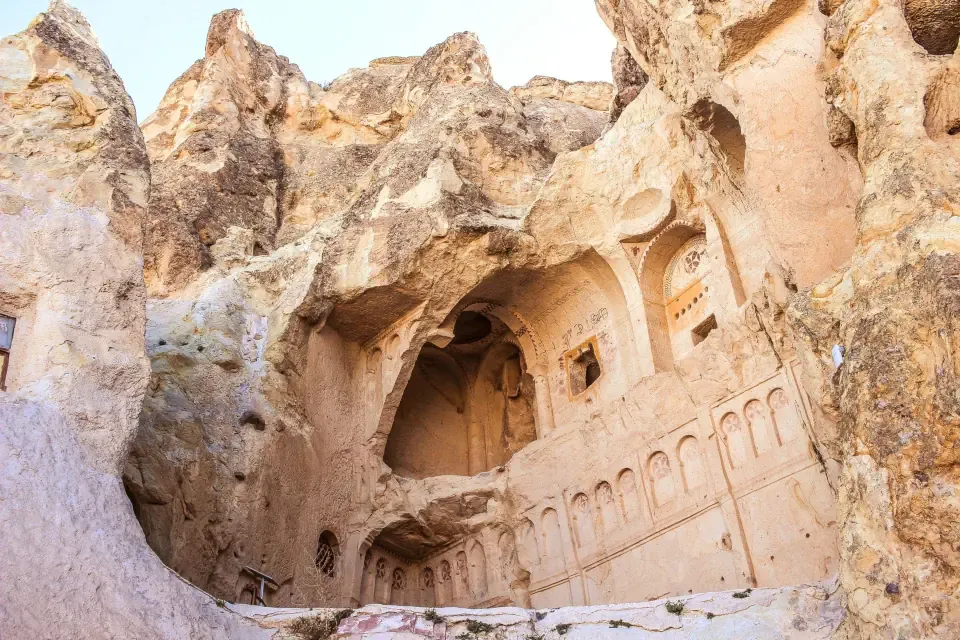
As you arrive at the entrance, you will notice two massive carved rock pillars that resemble multi story apartment complexes:
- The Nun’s Convent
- The Monk’s Dormitory
Both were carved after the 9th century. Once you pass through the turnstiles and cross the main clearing, you will reach the first visitable site: The Chapel of St. Basil.
Though small, St. Basil’s Chapel is an excellent example of a classic Cappadocia cave church. Inside, you can see historic tombs carved directly into the floor, some of which still contain ancient skeletal remains.
Saint Basil and the Birth of Communal Monasticism
This monastery complex reached its peak around the 9th century, but the roots of monastic life here go back much further.
In the early centuries of Christianity, monks withdrew from society to live as isolated hermits. That changed in the 4th century with Basil of Caesarea (Saint Basil). Inside the very first chapel, you can see his image painted on the wall.
Saint Basil revolutionized monastic life by encouraging communal living:
- Monks lived together in organized communities.
- They shared food and domestic responsibilities.
- Monasteries became centers of education for the local population.
Visual Sermons for the Illiterate
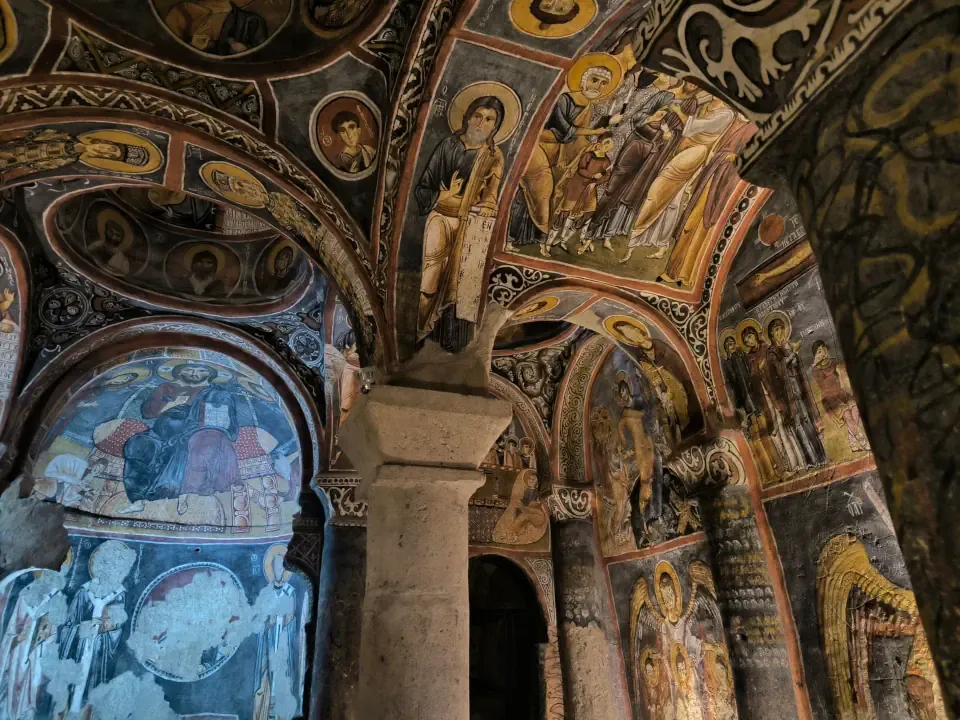
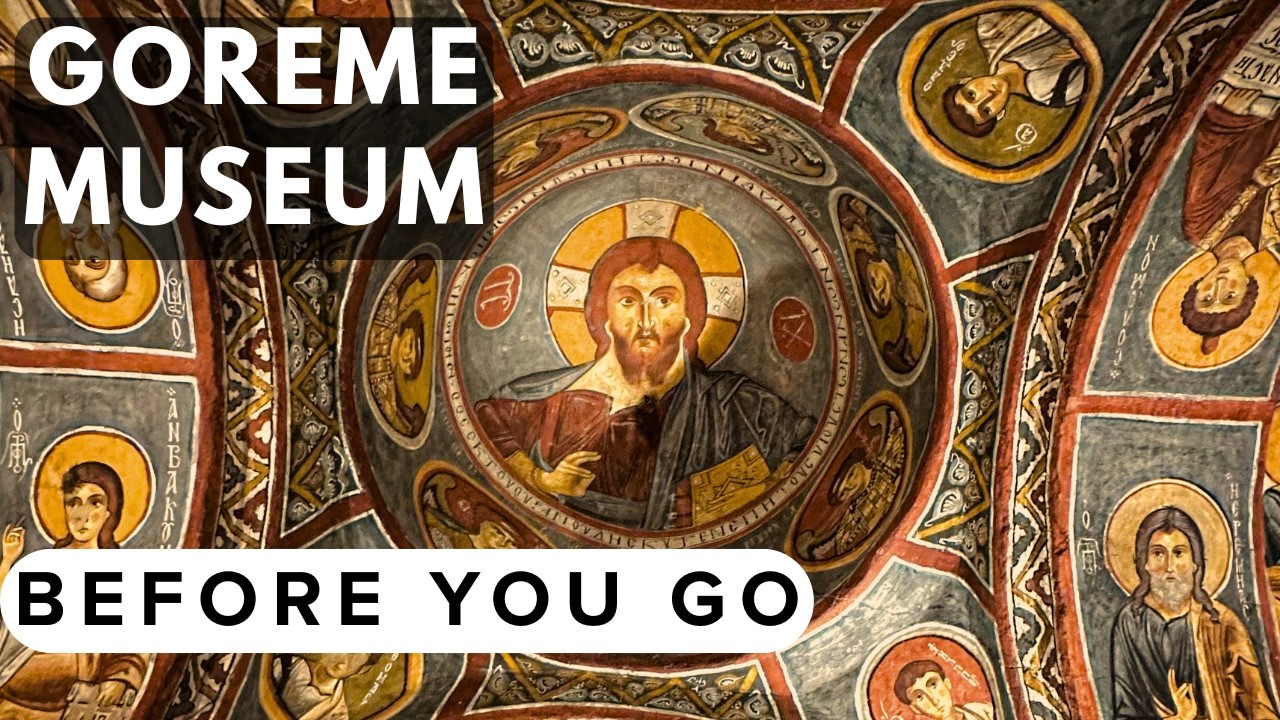
During the Middle Ages, most local farmers and merchants were illiterate and could not read scripture. Monks opened these churches to the public, using wall paintings to tell the story of Jesus. These frescoes were not merely decorative, they functioned as visual sermons.
Architecture Carved in Stone: Understanding “Tuff” Rock
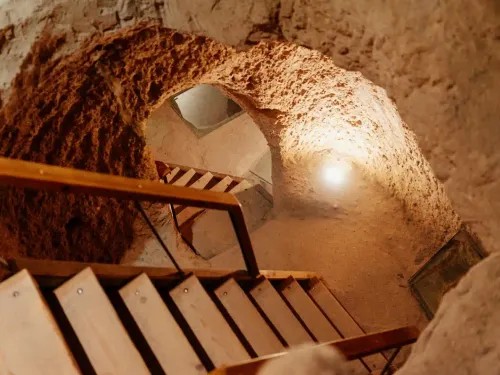
Every church and chapel in Goreme is carved directly into the earth. This was possible because of Cappadocia’s volcanic rock, known as tuff.
Memory Trick: Think of Tuff as “Tough enough” to hold a structural shape but soft enough to carve with a simple hand chisel. This unique geology allowed entire complexes to be carved out of solid stone.
The Apple Church (Elmali Kilise)
One of the most architecturally sophisticated stops in the museum is the Apple Church:
- Structure: Features four carved rock columns supporting nine domes, with a large central dome built in a Maltese cross layout.
- Red Ochre Layer (11th Century): Simple geometric and floral patterns painted directly onto the stone.
- True Fresco Repainting (12th Century): As the monastery grew wealthier from local donations, a master painter was hired to repaint the interior using true fresco techniques (applying pigments onto wet plaster for long lasting vibrancy).
Why is it called the “Apple Church”?
- One popular theory points to a painting of the Archangel Michael holding an orb that resembles a red apple.
- An ancient apple tree once grew near the church entrance.
The Chapel of St. Barbara & The Snake Church
After exiting the Apple Church, stairs lead toward the monastic kitchens and refectories. Nearby sit two distinct chapels:
- Chapel of St. Barbara: Features rustic red ochre drawings depicting animals, mythological creatures and floral motifs that were likely painted by the monks themselves.
- The Snake Church: Famous for its dramatic wall painting of St. George and the Dragon. In Eastern Orthodox artistic traditions, the dragon is depicted as a giant serpent, giving the church its local name.
Theological Art: The Cappadocian “Last Supper”
The churches of Cappadocia were intimate spaces where theological narratives surrounded the monks during prayer. Interestingly, these paintings reflect unique local cultural traditions.
Cultural Detail: In Western European art, Jesus is typically depicted sitting in the middle of a long table for visual symmetry. In Cappadocian frescoes, traditional Eastern etiquette overrides aesthetics and the guest of honor sits at the head of the table, so Jesus is usually depicted on the far end rather than the center.
The Refectories & The Famous Dark Church
Further up the hill, you will encounter the daily working spaces of the monastery:
The Refectories (Dining Halls)
These impressive chambers feature long stone tables and benches carved seamlessly from the bedrock. Monks would sit here in complete silence during simple meals while scripture was read aloud.
The Dark Church (Karanlik Kilise)
- Why the name? The church received almost no natural sunlight due to a single tiny window aperture.
- Preservation: Because sunlight never faded the pigments, the Dark Church contains the most vibrant, incredible frescoes in Cappadocia.
- Note: Requires a separate admission ticket at the site, which is highly recommended for art and history enthusiasts.
Upper Complex
Past the Dark Church sit the Chapel of St. Catherine (featuring carved stone crosses) and the Sandal Church, situated above another large dining hall.
Practical Visitor Tips
If you are planning a visit to the Goreme Open Air Museum, keep these essential tips in mind:
- 👟 Footwear: Wear comfortable walking shoes with good grip. The paths are mostly uphill and terrain can be uneven.
- ⏱️ Duration: Allow at least 1.5 hours to explore the entire complex.
- ☀️ Weather: Summer sun can be intense (bring water and a hat), while winter months bring cold winds.
- 📸 Photography Rules: Photography and videography are strictly prohibited inside all churches and chapels to preserve the frescoes. You may take photos in outdoor areas, kitchens and dining halls.
- 📜 Language Note: All wall inscriptions are written in Medieval Greek, as the region was inhabited by Greek speaking Christians during the Byzantine period.
Summary: The Legacy of Goreme
What remains today is only a fraction of the original monastic city. Earthquakes, erosion and time have collapsed many caves over the centuries.
Unlike the grand marble cathedrals of Western Europe, Goreme is humble, carved and hidden within the earth. It stands as an extraordinary testament to human adaptability, art and faith carved permanently into stone.
Support the Show: If you enjoyed this audio guide, please leave a quick rating or review on Spotify, Apple Podcasts or YouTube.