Topkapi Palace: Ottoman Royal Residence & Museum in Istanbul
The Topkapi Palace Museum was the home of imperial sultans and the administrative heart of the Ottoman Empire. It is one of the most essential historical landmarks to explore in Istanbul. This complex offers an unparalleled look into court life, royal intrigues and the treasures of the golden era of the Ottomans.
Historical Background: The Conquest of Istanbul
Sultan Mehmet II after years of preparation finally conquered Byzantine Constantinople in 1453, which earned him his legendary moniker, “the Conqueror”. After his conquest, Mehmet the Conqueror initiated a city wide reconstruction mega project and at the same time ordered the construction of Topkapi Palace. The royal compound remained the primary throne room and administrative powerhouse of the empire for nearly four centuries until the court relocated to the Westernized Dolmabahce Palace in the mid 19th century.
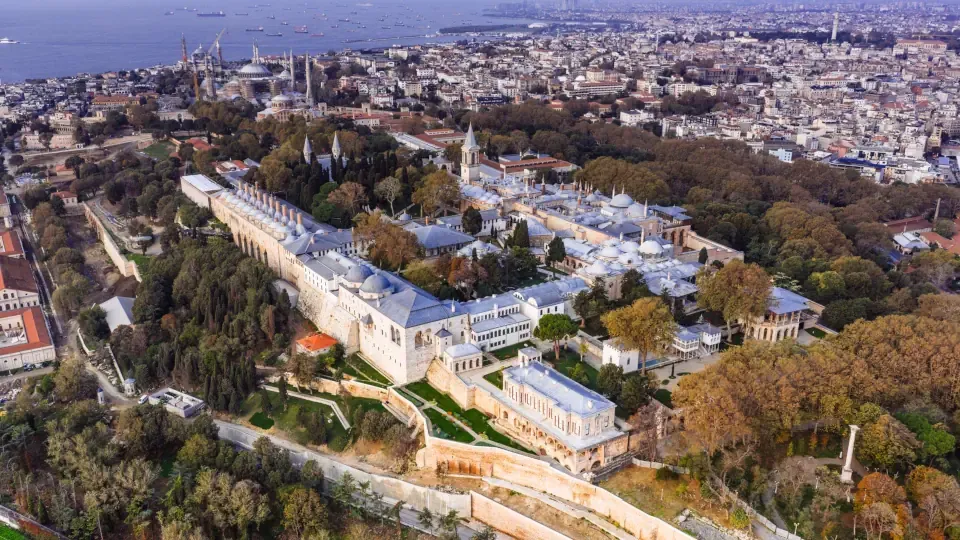
Constructed after the 1453 conquest, Topkapi Palace served as the epic political heart of the Ottoman Empire.
Exploring Topkapi Palace: Courtyards & Structure
If you wish to visit the palace complex thoroughly, we suggest taking a full afternoon. The layout is organized into four inner courtyards:
The First Courtyard (Alay Meydani)
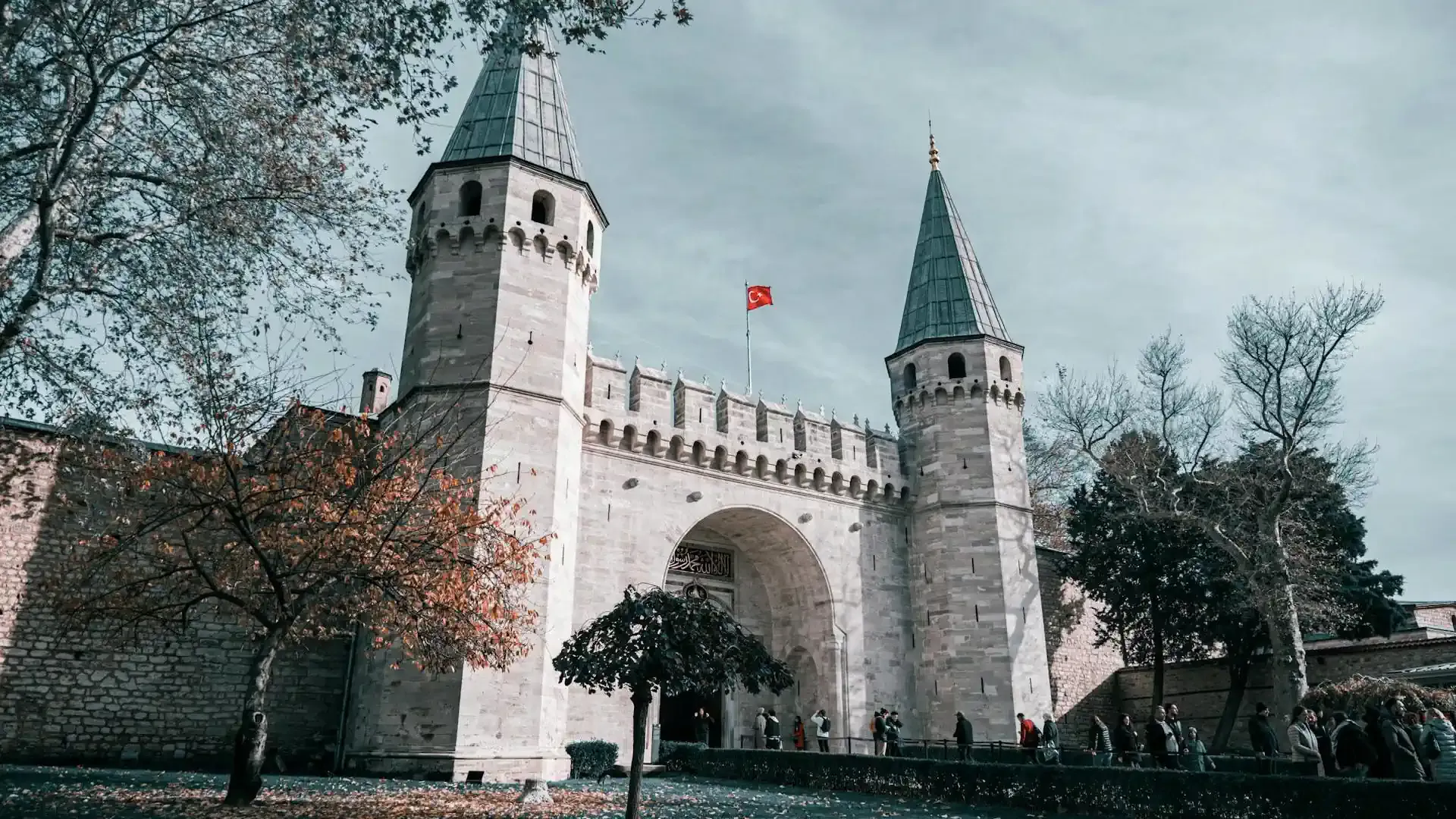
The public facing outer court of the palace compound. Key highlights include the monumental Imperial Gate (Bab-i Humayun) featuring Mehmed II’s official seal, the ancient 4th century Byzantine Hagia Irene Church (repurposed by the Ottomans as an imperial arsenal) and the Executioner’s Fountain.
The Second Courtyard (Divan Square)
This was the official business hub of the empire, once restricted to state dignitaries. It houses the Imperial Council Chamber (Divan-i Humayun) where the Grand Vizier gathered ministers. Travelers can visit the Imperial Treasury weapon collections and the Palace Kitchens, which once cooked for 4,000 people daily and now display exquisite imperial porcelain.
The Third Courtyard (The Inner Court)
This highly secured courtyard protected the Sultan’s personal domain. It can only be entered via the highly symbolic Gate of Felicity. In this courtyard, visitors can find the grand Audience Chamber for greeting foreign ambassadors, the royal portrait galleries, the Enderun Library and the sacred Privy Chamber, which guards revered Islamic relics including the Prophet Muhammad’s mantle and sword.
The Fourth Courtyard (Imperial Pavilions)
This terraced area is filled with gardens overlooking the sea. There are also pavilions such as Iftar Kiosk where the Sultan ate after fasting in Ramadan over panoramic Bosphorus views.
The Harem
The Harem was the highly restricted, private residential wing of the Sultan’s family. It served as the living space for the Queen Mother, imperial wife and children. The Harem functioned as a political center where the Sultan’s Mother steered court politics and imperial decrees from behind closed doors.
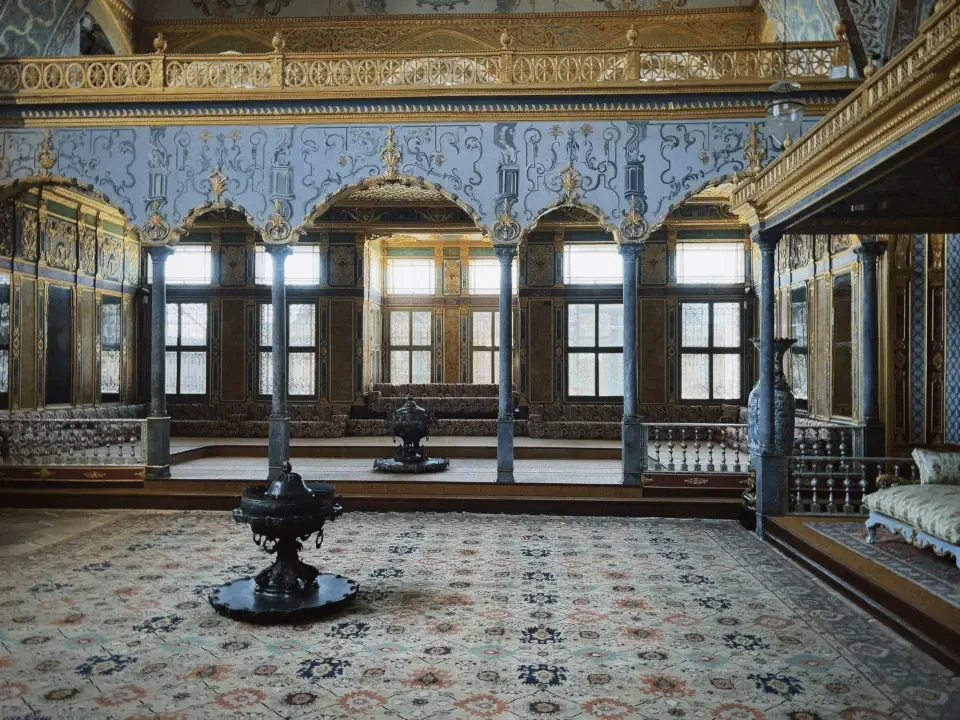
The Harem operated as both a restricted private residence and an influential political center.
Pop Culture: The Magnificent Century
The global success of the Turkish historical drama The Magnificent Century sparked a massive wave of international interest in Topkapi Palace. By dramatizing the golden reign of Suleiman the Magnificent, the show brought the complex political maneuvers, secret Harem alliances and royal histories of this exact compound to television screens worldwide.
Is it Worth Visiting Topkapi Palace?
Absolutely. Topkapi Palace is a network of historical chambers, courtyards and museum galleries. It offers a deep dive into how the Ottoman world was governed, defended and lived behind closed doors, making it an unmissable part of any Istanbul itinerary.