Hagia Sophia: Istanbul’s Iconic Byzantine & Ottoman Masterpiece
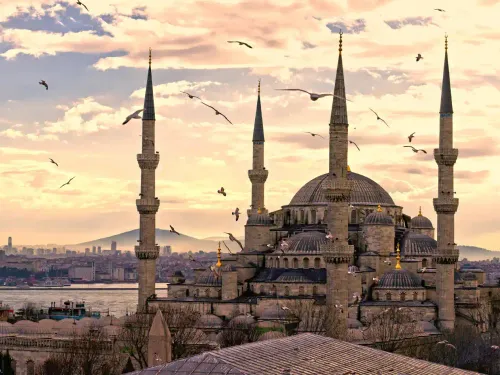
Hagia Sophia with its massive dome and golden mosaics is a popular visit amongst travelers in Istanbul. It is located across from the Blue Mosque and Topkapi Palace. Even if you don’t have the time to visit the interior, we suggest taking a walk by the Hippodrome to see its minarets and domes from the outside.
Visiting Hagia Sophia: Etiquette & Practical Info
Visitors who are not there to pray in the mosque can explore the historic upper gallery. To avoid peak summer crowds, visit during the quieter winter months from October to April. If visiting during the summer months, we suggest early morning visits.
As an active house of worship, proper etiquette is mandatory:
- Hours: Access is restricted during the five daily prayers and Friday noon sermons.
- Dress Code: Women must cover their heads, shoulders and legs (wraps are available at the entrance). Men cannot wear shorts. Avoid clothing with flags or commercial emblems as you might be denied entry or escorted out.
- Footwear: Shoes must be removed before entering carpeted prayer zones.
Hagia Sophia Throughout History
Hagia Sophia as a Byzantine Church (537-1453)
The cathedral was commissioned by Emperor Justinian I in 537 AD. It served as the center of Eastern Orthodox Christianity for nearly a millennium. Architects Anthemius of Tralles and Isidore of Miletus designed its revolutionary dome, which appears to float above the central nave.
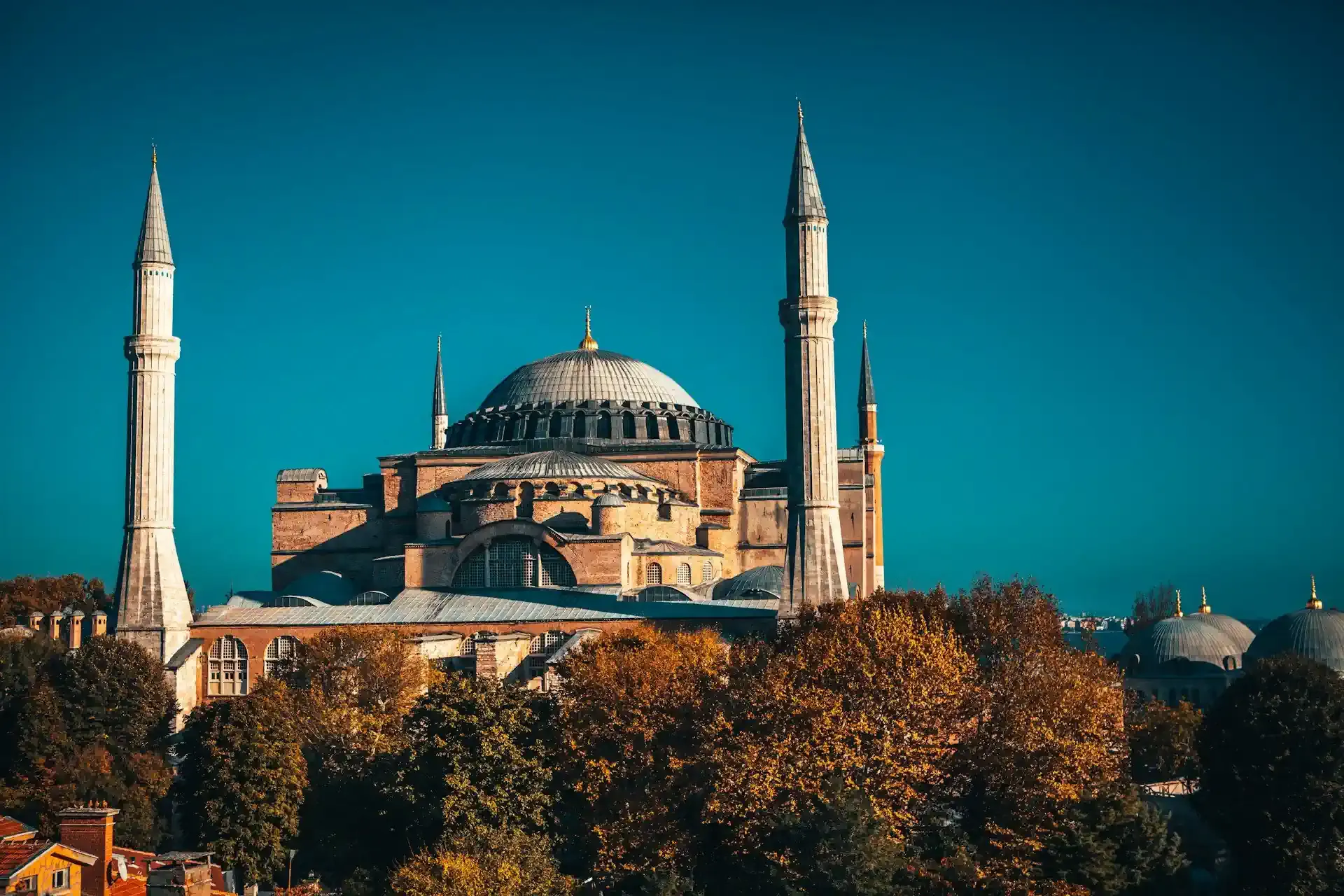
Completed in 537 AD, Hagia Sophia stands as a triumph of ancient engineering.
Ottoman Conversion (1453-1931)
Sultan Mehmed II converted the cathedral into Ayasofya Mosque after the conquest of Constantinople in 1453. Instead of destroying the Christian mosaics, they were preserved under protective plaster. Islamic features, including the mihrab (prayer niche) and massive calligraphic roundels were added to the interior. Visitors can see the decorations from the buildings Christian phase as they were well preserved.
Museum Era (1935-2020)
Mustafa Kemal Ataturk, the founder of the Republic of Turkey transitioned the building into a museum in 1935. The plasters which covered the Christian decorations were removed and both Christian frescoes and Islamic art were displayed openly.
Modern Mosque Status (2020-Present)
Hagia Sophia was reconverted into an active mosque in 2020. The ground floor remains dedicated to prayer and the upper gallery stays open to visitors interested in the buildings history and beauty.
Christian Mosaics of Hagia Sophia
The upper gallery houses world famous Byzantine artwork. One of the key pieces is the 13th century Deesis Mosaic, showing Christ with Mary and John the Baptist. Another famous one is the 9th century Virgin and Child Mosaic in the apse. Other imperial mosaics depict historical donors offering gifts to Christ.
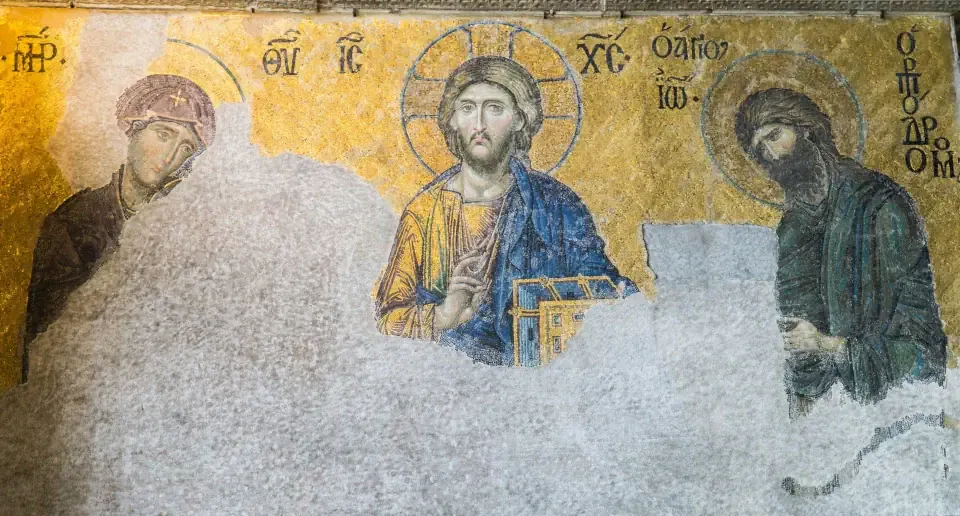
Beautifully restored 13th century Byzantine mosaics line the upper gallery walls.
Islamic Architectural Elements
The Ottoman era introduced several iconic features to the building’s silhouette:
- Four Minarets: Built across different eras by successive sultans.
- The Mihrab: An intricate prayer niche angled toward Mecca and decorated with Iznik tiles.
- Calligraphic Roundels: Massive wooden medallions bearing the sacred names of God, the Muslim prophet Muhammad and the early caliphs.
Superstitious Beliefs and the “Weeping Column”
The marble Wishing Column in the first floor is legendary for its mystical healing properties. Local lore says that if you insert your thumb into the small opening, rotate it a full clockwise circle and your hand emerges damp, your wish will be granted.
Popular Culture Legacy
Hagia Sophia has been important for both Christian and Muslims across the world and this makes it a favorite backdrop for modern media. Notably, it served as the atmospheric stage for the international climax of Dan Brown’s thriller Inferno.