Visiting the Blue Mosque: Etiquette & Practical Info
While entry is entirely free, the Blue Mosque remains an active house of worship. Visitors must follow standard mosque etiquette:
- Visiting Hours: Tourists are restricted from entering during the five daily prayer windows, particularly the Friday noon prayers. It is highly recommended to check local prayer times before setting out.
- Dress Code: Women must cover their heads, shoulders, and legs (wraps and scarves are provided at the entrance if needed). Men must avoid shorts. Avoid clothes featuring flags, prominent religious symbols or large commercial emblems.
- Footwear: Shoes must be removed before stepping onto the interior prayer carpets. Free plastic bags are provided at the entrance to carry them with you.
History of the Sultan Ahmed Mosque
This grand mosque was built to assert the strength of the Ottoman Empire and was commissioned by Sultan Ahmed I in 1609. The construction was carried out by a student of the legendary Sinan the Architect, Sedefkar Mehmed Aga. The mosque was completed in 1616 and blended monumental scale with traditional Islamic geometric design.
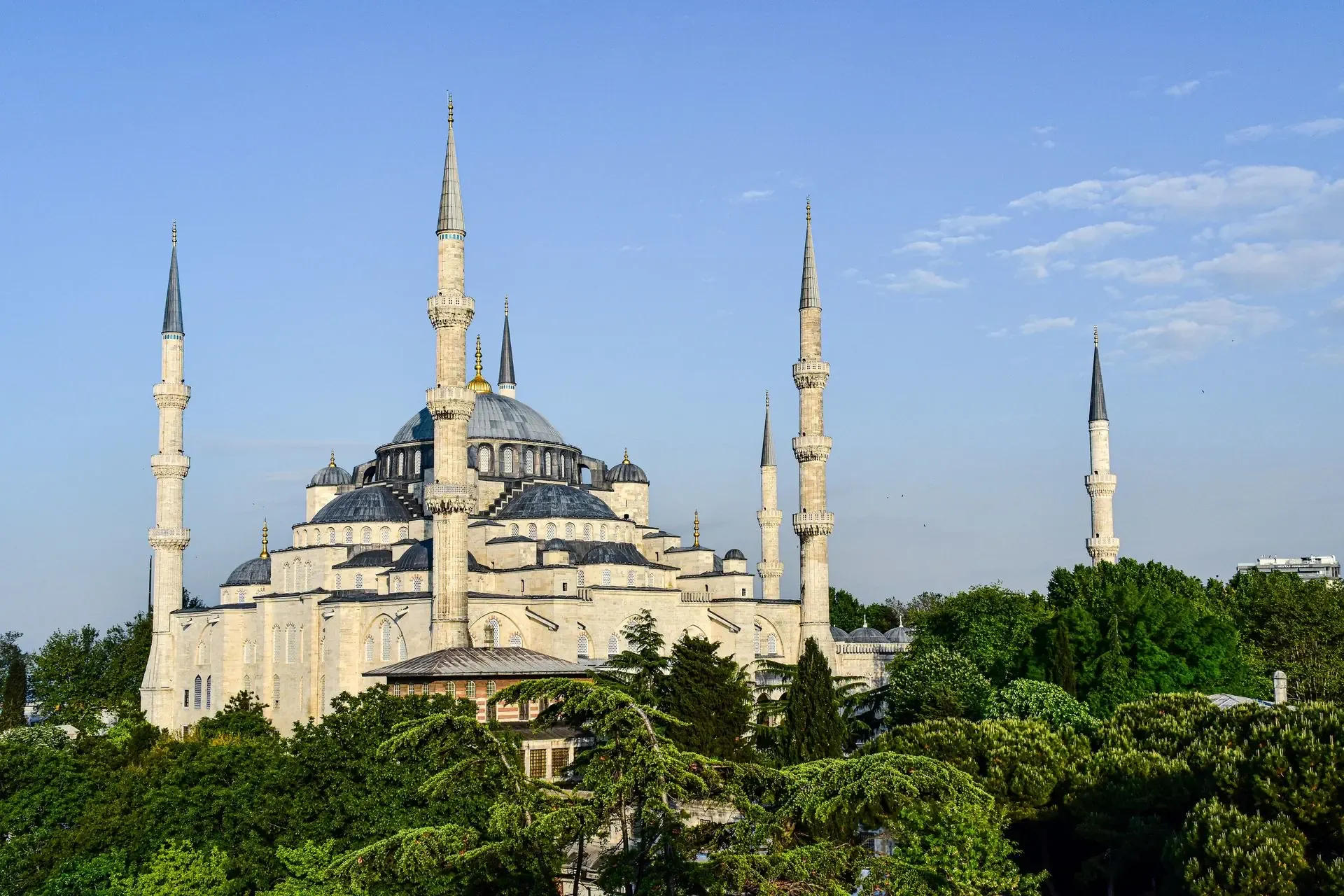
Commissioned in 1609, the mosque stands as a classic showcase of imperial Ottoman scale.
The Mosque Complex
Like most imperial structures of its era, the mosque was designed as a religious and social community hub. The original complex was extensive, featuring:
- An Islamic school (madrasa)
- A dedicated hospital and market space
- A public kitchen (imaret) serving the local community
- A traditional roadside inn (caravanserai)
- The monumental tomb of Sultan Ahmed I, located within the outer courtyard
The Famous Blue Tiles and Iznik Ceramics
The landmark earned its global nickname from its interior lined with over 20,000 handmade ceramic tiles. These tiles were sourced from the historical pottery town of Iznik (Nicaea) and feature traditional floral designs, intricate arabesques and calligraphy.
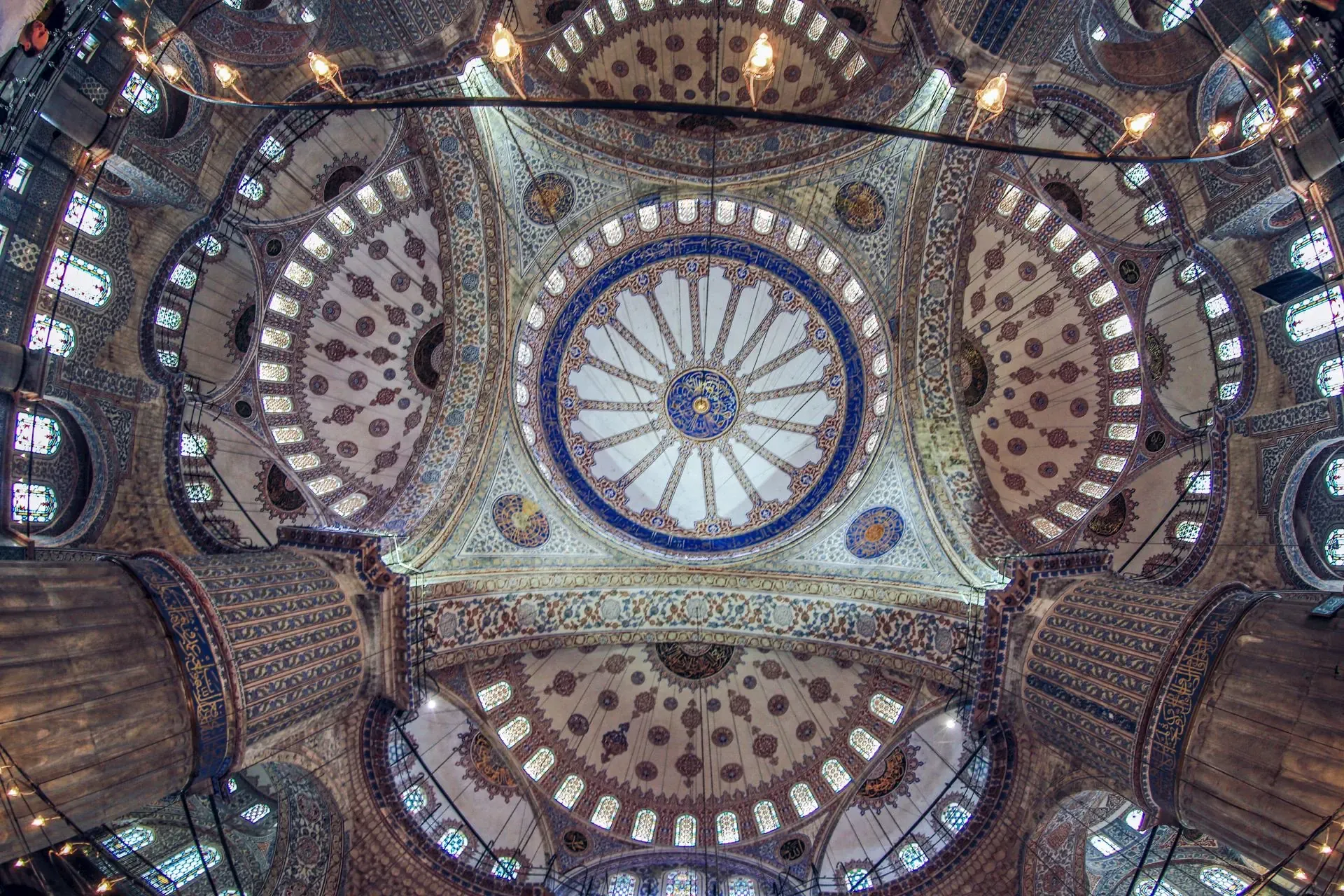
Over 20,000 handmade tiles give the mosque its famous moniker.
The Controversy of the Six Minarets
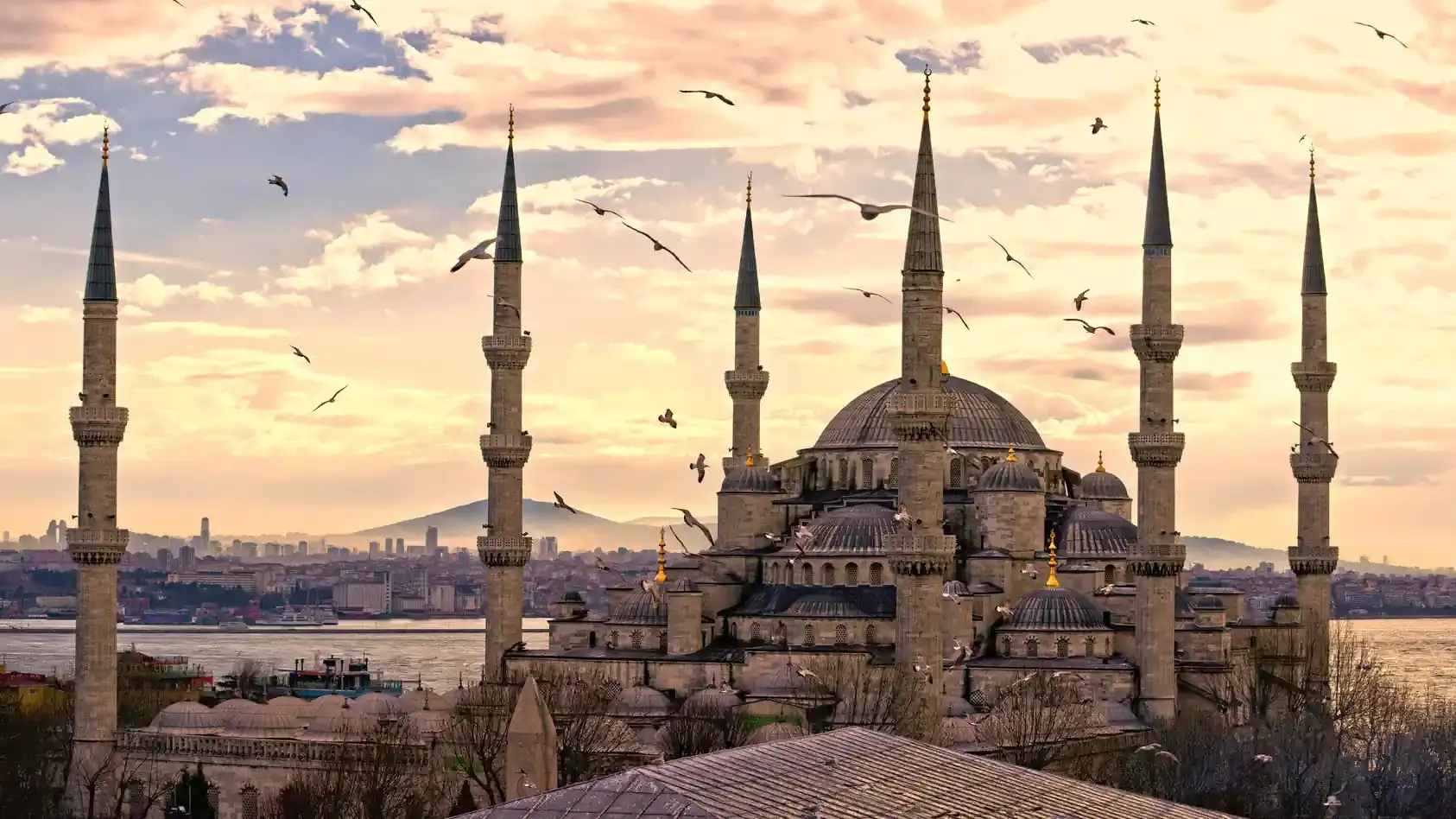
When designing the mosque, the architect planned for six minarets. It might seem as just another architectural decision but at the time, only the Masjid al-Haram (The Great Mosque of Mecca) possessed six minarets. This resulted in accusations of arrogance and disrespect towards the religious centre of Mecca. Sultan Ahmed I directly funded the construction of a seventh minaret for Mecca’s holy site, quickly settling the dispute.
Modern Cultural Legacy
The Blue Mosque serves as a visual symbol for Istanbul in international tourism campaigns. With its blue tiles, it is featured frequently in major travel literature. It is also widely used by international media, including the climax of Dan Brown’s thriller Inferno.