Basilica Cistern: The Ancient Underground Water Reservoir in Istanbul
Are you wondering if it is worth visiting the Basilica Cistern? Absolutely. This ancient underground water reservoir offers an unforgettable atmosphere and is located just steps away from the Hagia Sophia in the historic Sultanahmet district of Istanbul. The cistern stands today as one of Istanbul’s most extraordinary architectural treasures.
Historical Background
The Basilica Cistern was commissioned by Byzantine Emperor Justinian I in the 6th century AD. It was engineered as a massive subterranean filtration system for the city. Using a network of aqueducts, it channeled clean water from the Belgrade Forest located 20 kilometers north.
The chamber is 453 feet long and 231 feet wide (138 meters long and 65 meters wide) and could hold up to 80,000 cubic meters of water. Today, it operates as a museum.
Inside the Cistern
The Columns
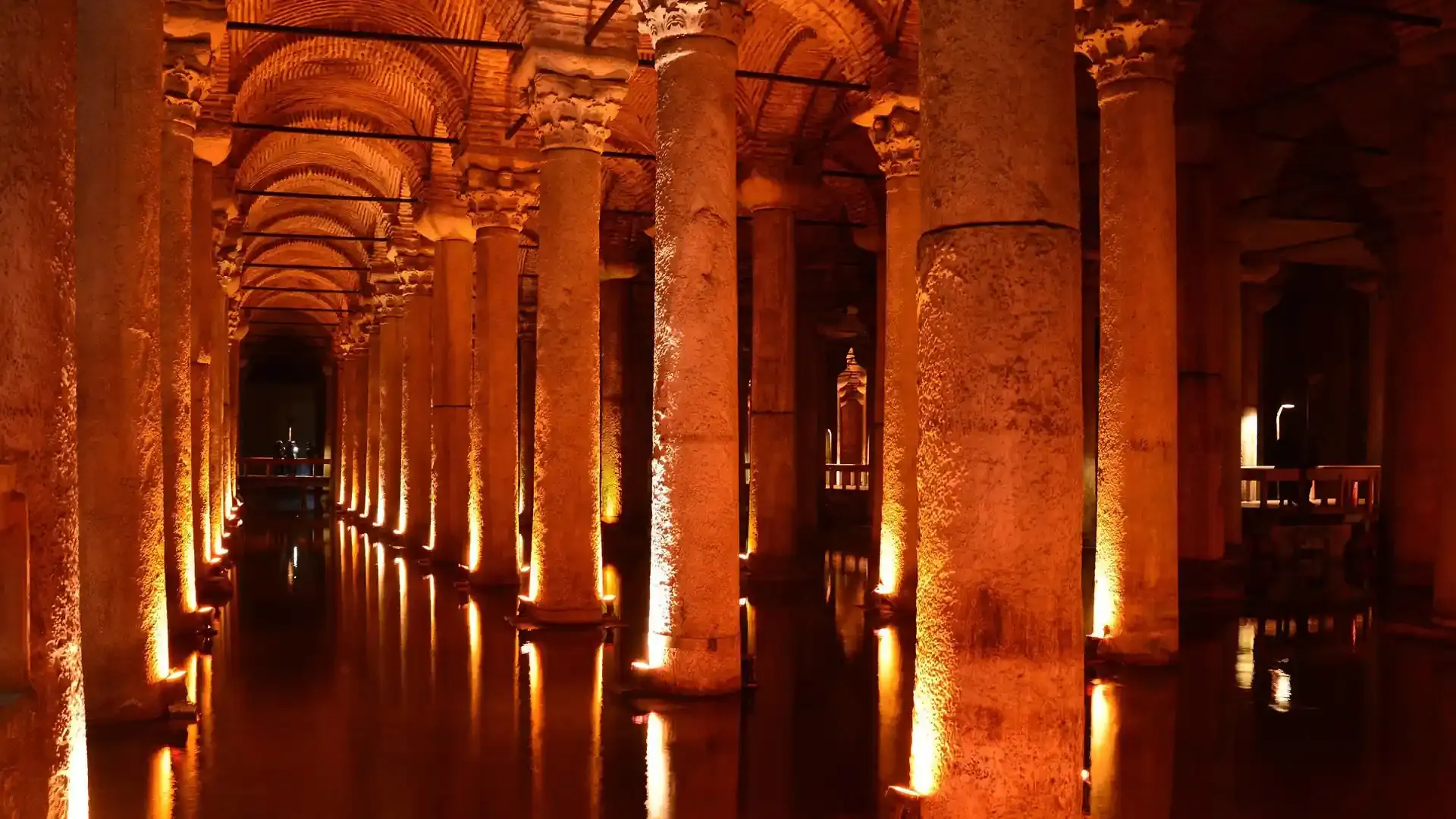
The subterranean chamber is supported by 336 marble columns arranged in 12 rows. These pillars that stand 30 feet (9 meters) high feature a beautiful mix of Corinthian and Doric capitals. Because they were recycled from various older Roman ruins, each column has00 its own unique design and history.
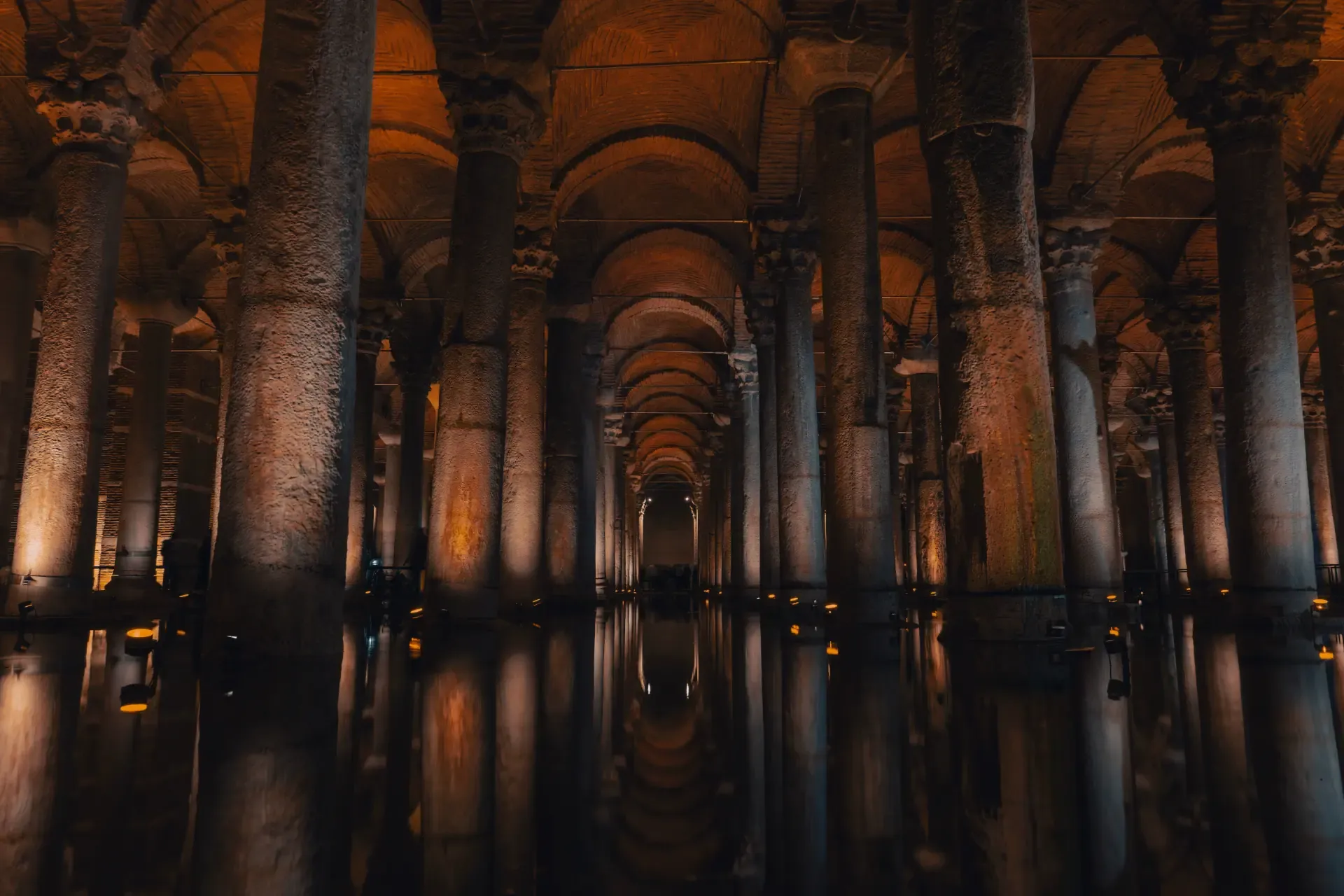
336 marble columns, many recycled from older Roman ruins, support the cistern's ceiling.
Medusa Heads
In the far northwest corner lie the cistern’s most famous highlights: two giant Medusa heads acting as column bases. Archeologists believe these Roman era sculptures were placed sideways and upside down either as convenient structural supports or as an effort to neutralize the petrifying gaze of this mythological creature.
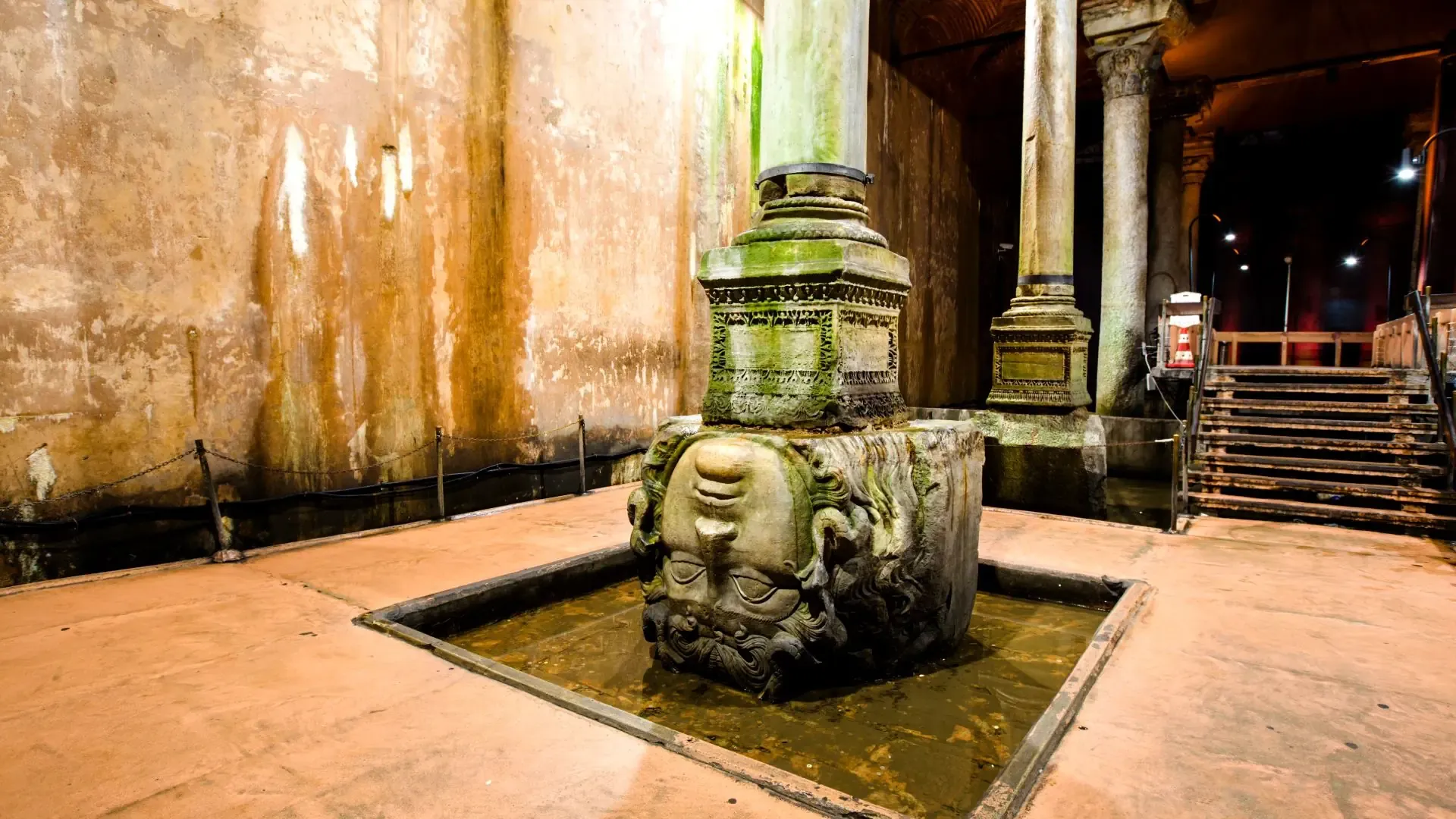
One of the cistern's two Medusa head column bases, placed sideways possibly to neutralize the Gorgon's gaze.
The Tear Column
Another remarkable feature is the Tear Column, recognizable by its tear shaped carvings. Local lore suggests these engravings were crafted as a tribute to the hundreds of workers who lost their lives during the cistern’s construction.
Popular References
The beauty of the cistern has captured the attention of Hollywood and classic literature alike. It serves as the dramatic backdrop for the climax of Dan Brown’s thriller Inferno. Classic cinema fans will also recognize it from the 1963 James Bond film From Russia with Love, where 007 rows a boat between the columns.