Mevlana Museum: Rumi’s Mausoleum in Konya
The Mevlana Museum is a historic dervish lodge in the center of Konya. Poet and philosopher Celaleddin Rumi who is regarded as the master lived in this city and was buried on this site. This sacred sanctuary is one of the country’s most visited pilgrimage sites because of the peaceful teachings of Mevlana. Today, the site serves as a museum that houses Sufi artifacts and historical manuscripts.
The Journey of Mevlana’s Family
Rumi’s story begins in Balkh (modern day Afghanistan) with his father, Bahaeddin Veled, a highly respected Islamic scholar. The family fled regional instability in the early 13th century and traveled across the Middle East. Eventually, they settled in Konya, the grand capital of the Seljuk Sultanate. The Seljuk Sultan welcomed the famous Bahaeddin Veled and the family established an academic and spiritual presence in the city. Rumi would later build his widespread influence.
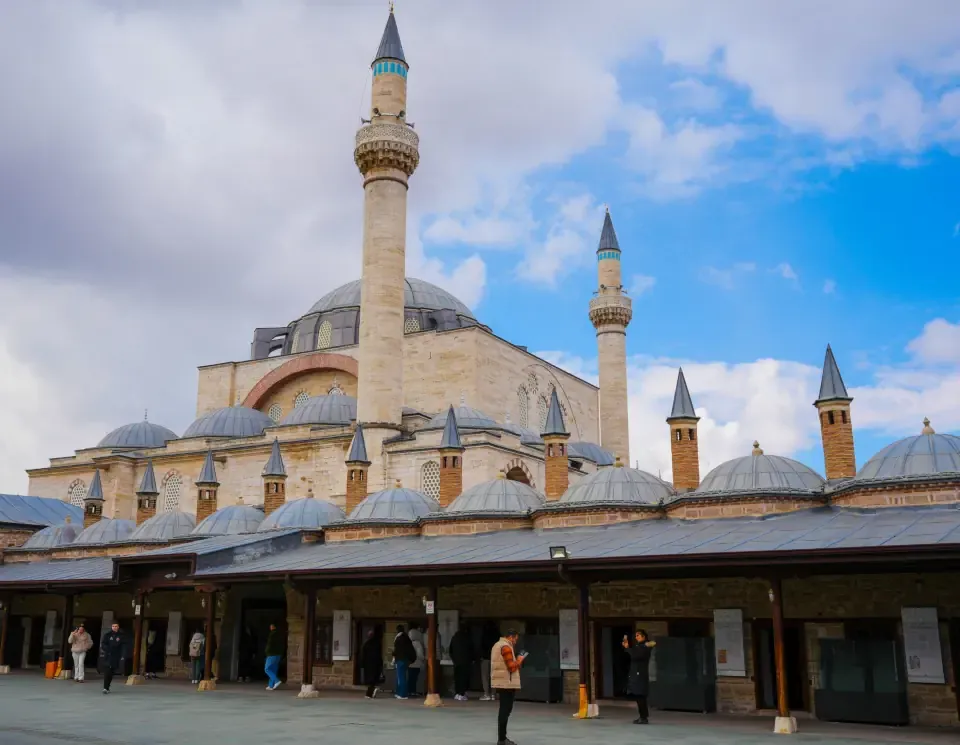
The Seljuk capital of Konya welcomed Rumi's family in the 13th century, establishing a historic center for Sufism.
Life of Mevlana Celaleddin Rumi
Mevlana Celaleddin Rumi (1207-1273) initially trained as a traditional theologian and jurist. However, his life transformed profoundly after meeting the wandering dervish, Shams-i Tabrizi. Their intense spiritual connection altered Rumi’s worldview completely.
Following Shams’ mysterious disappearance, Rumi channeled his mystical experiences into poetry. His masterwork, the Mesnevi (Masnavi), is celebrated as one of the greatest pillars of Sufi literature. His other work is a gathering of lyrical verses called Divan-i Kebir. Following Rumi’s death, his devoted followers codified his teachings by establishing the Mevlevi Sufi Order, globally renowned for their meditative Sema (Whirling Dervish) ceremonies.
The Mevlana Museum Complex
Following the nationwide closure of lodges in 1925, the historic compound was formally converted into a public museum in 1926. The complex preserves the disciplined lifestyle of the early Mevlevi order.
The Tombs Section
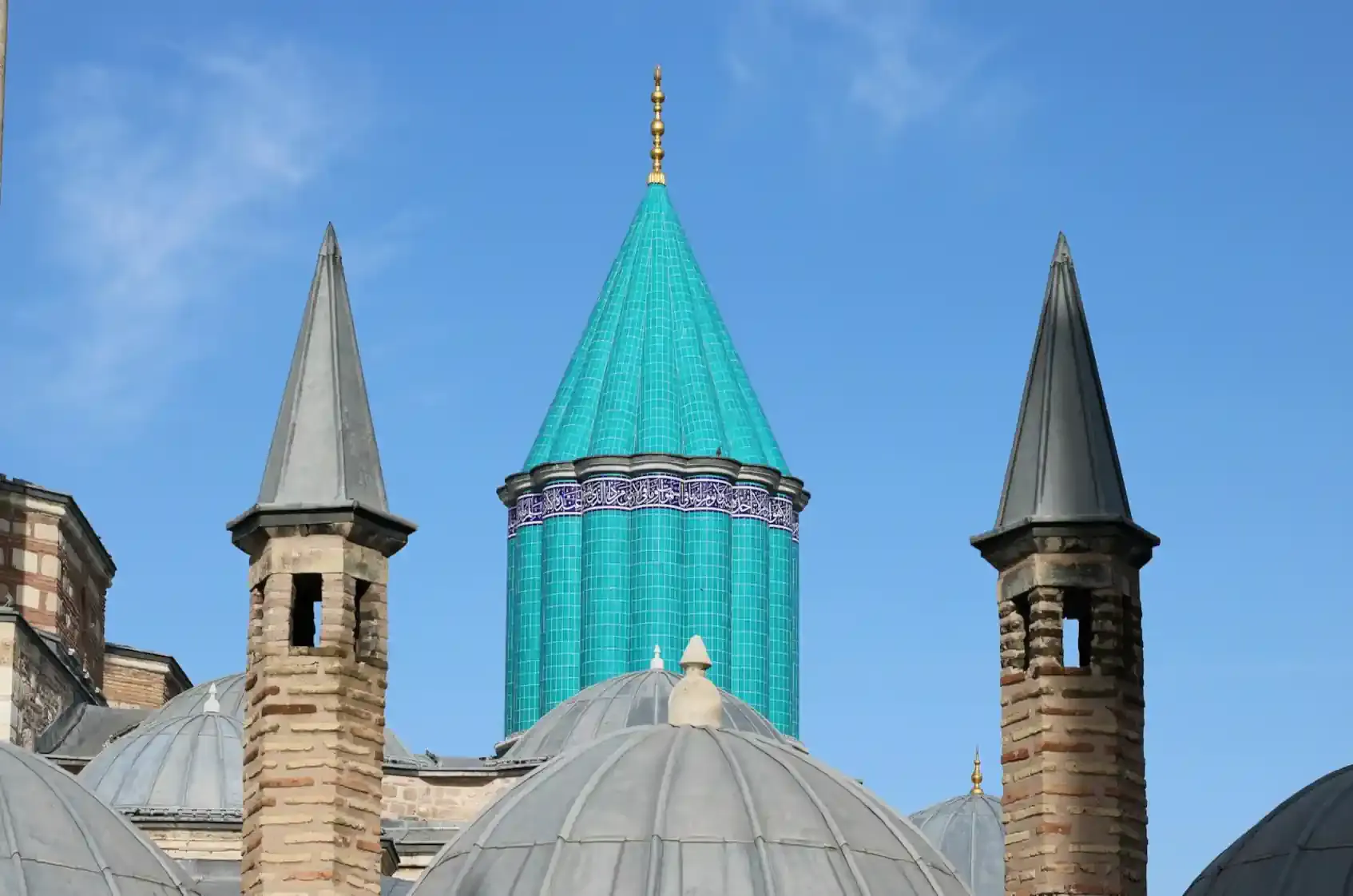
Most of the visitors first of all wish to see Rumi’s mausoleum. The location of his burial site is instantly recognizable from the outside by its Green Tiled Dome. His large sarcophagus is covered with a green velvet shroud embroidered with gold calligraphy. He is buried alongside his father, Bahaeddin Veled and his son, Sultan Veled. The master is surrounded by the tombs of his closest disciples and other family members.
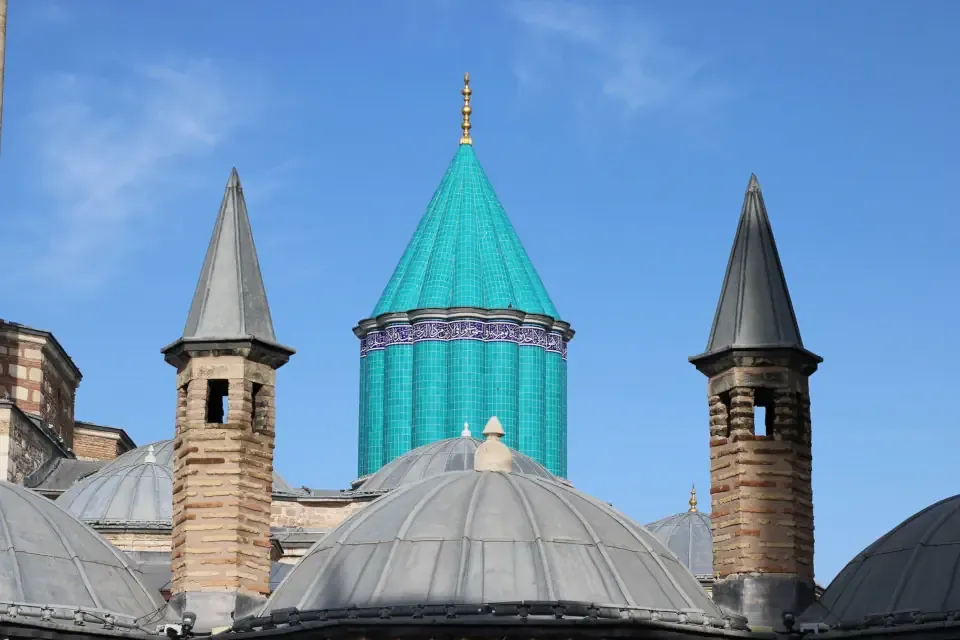
The distinctive Green Dome marks the final resting place of Rumi and his closest family members.
Semahane (Whirling Hall)
This grand historic hall was built to perform the sacred Sema rituals. Today, the space showcases an exhibition of Rumi’s Mesnevi volumes, alongside beautifully decorated Qurans and traditional musical instruments used to guide the dervishes into their spiritual trances.
The Mosque
The mosque originally hosted daily prayers and ceremonial Mevlevi gatherings. It remains an active house of prayer open to visitors.
Dervish Cells and Daily Life Artifacts
The small rooms in the main courtyard served as residential quarters where dervishes lived and studied. These restored cells now exhibit historical artifacts that help visitors understand the daily monastic life. Some of these items are traditional tall felt hats (sikke), white robes, illuminated calligraphy pieces and original Sufi musical instruments.