Ephesus Ancient City: Roman History & Marvels
Ephesus Ancient City is remarkably well preserved with its marble streets and iconic classical architecture. The city also played an instrumental role in early Christianity. It is frequently mentioned in the Holy Bible as St. Paul visited the city but was expelled from it and afterwards St. John the Apostle lived here until his natural death. It also once housed the legendary Temple of Artemis, one of the Seven Wonders of the Ancient World.
History of Ephesus
According to mythology, Ephesus was founded in the 10th century BC by the Athenian prince Androklos. Following centuries of Greek rulers, the region was officially bequeathed (peacefully given) to the Roman Empire. Under the reign of Emperor Augustus, Ephesus entered a 200 year golden age as an important Mediterranean commercial hub. However, its downfall was eventually triggered by environmental shifts: local rivers progressively filling the bay with silt, landlocking the city and permanently closing its vital harbor.
Best Way To Visit Ephesus
The archaeological site features two main ticket gates. One is by the lower Grand Theatre, while the upper entrance is near the Bouleuterion (the Council House). We highly recommend starting your journey from the upper gate after visiting the nearby House of the Virgin Mary. This way, you can walk downhill through the ruins and exit by the theater. If you are driving yourself, parking at the lower gate is easier, though it requires walking the main path twice. For this reason, a guided tour is highly practical here.
Don’t Miss In Ephesus
Agora
The central public marketplace where vendors traded daily goods. This meeting ground featured covered walkways to shelter locals from seasonal rain and intense Mediterranean sun.
Odeion - Bouleuterion
A small 1,500 seat theater used primarily for concert performances and parliamentary assemblies of the local aristocracy. As the parliament gathered here, a wooden roof was built over the structure to protect council sessions.
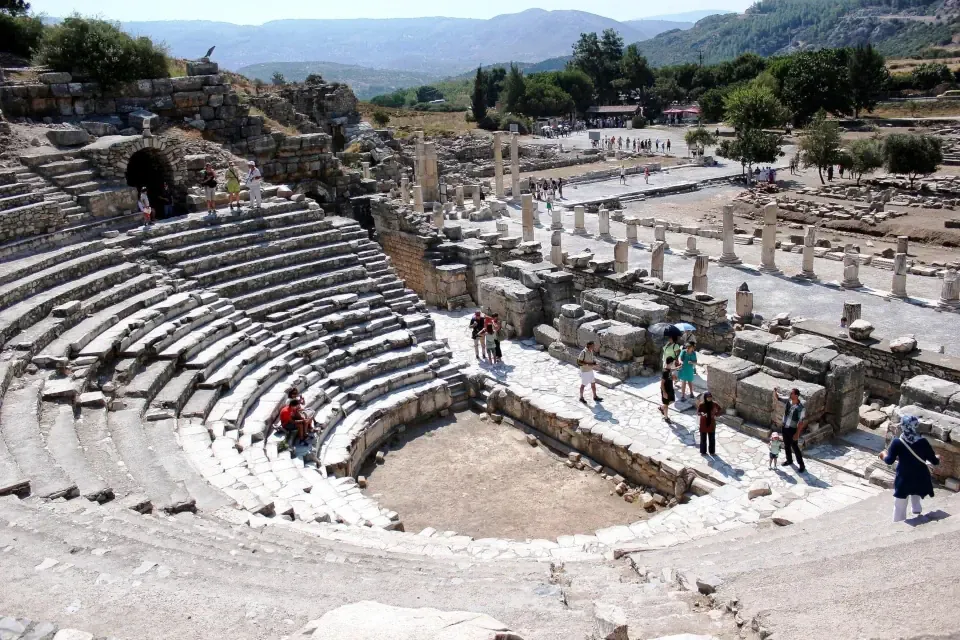
The Odeion served as both an intimate acoustic concert hall and the city's executive parliament building.
Prytaneion
The ancient city hall where receptions and religious ceremonies were held. It guarded the city’s perpetual sacred fire which used to symbolize independent sovereignty.
Memmius Monument
A stone monument built to honor the grandson of the Roman dictator Sulla, who protected Roman citizens against the aggressive incursions of King Mithridates.
Polio Fountain & Temple of Domitian
The Polio Fountain honored the creator of the historic Marnas Aqueduct, while the neighboring temple honored Emperor Domitian. The collection of statues and reliefs discovered at both sites can be viewed inside the nearby Ephesus Museum in Selcuk.
Fountains of Trajan & Hadrian’s Temple
The monumental Fountain of Trajan once showcased a statue of the Emperor with his foot on a globe, symbolizing world conquest. The nearby Temple of Hadrian was built to honor the emperor’s visit. Its reliefs depict the city’s foundation myth and the history of Ephesus.
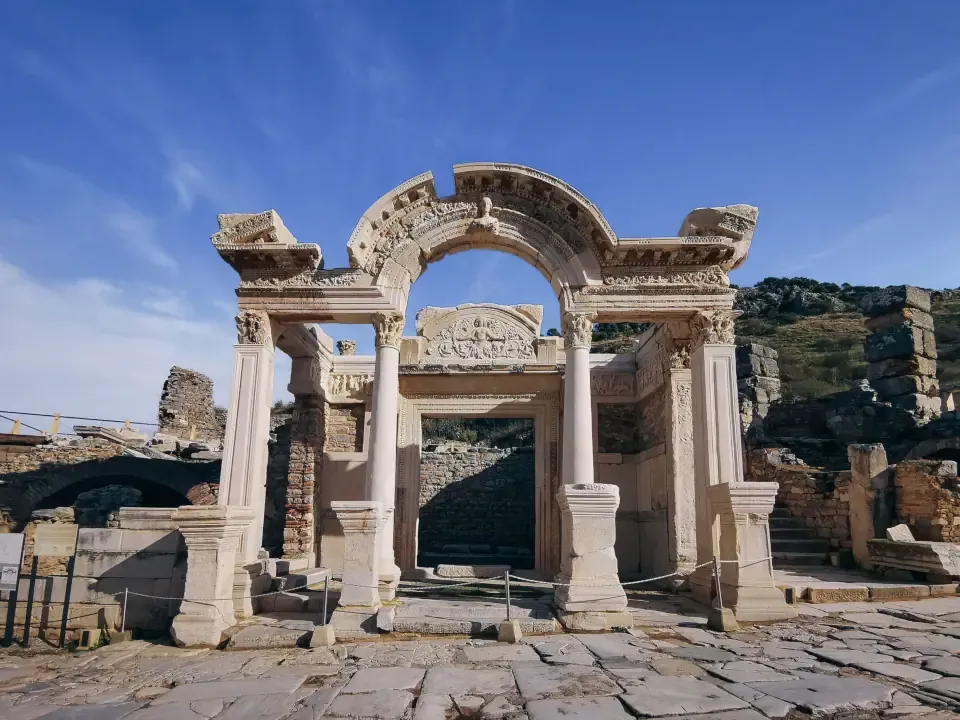
Exquisitely preserved stone reliefs decorate the architectural facade of Hadrian's Temple.
Scholastic Baths
A massive bathing and social complex that was vital in the Roman public life. The building was renovated in the 5th century by a prominent Christian woman named Scholastikia.
The Celsus Library
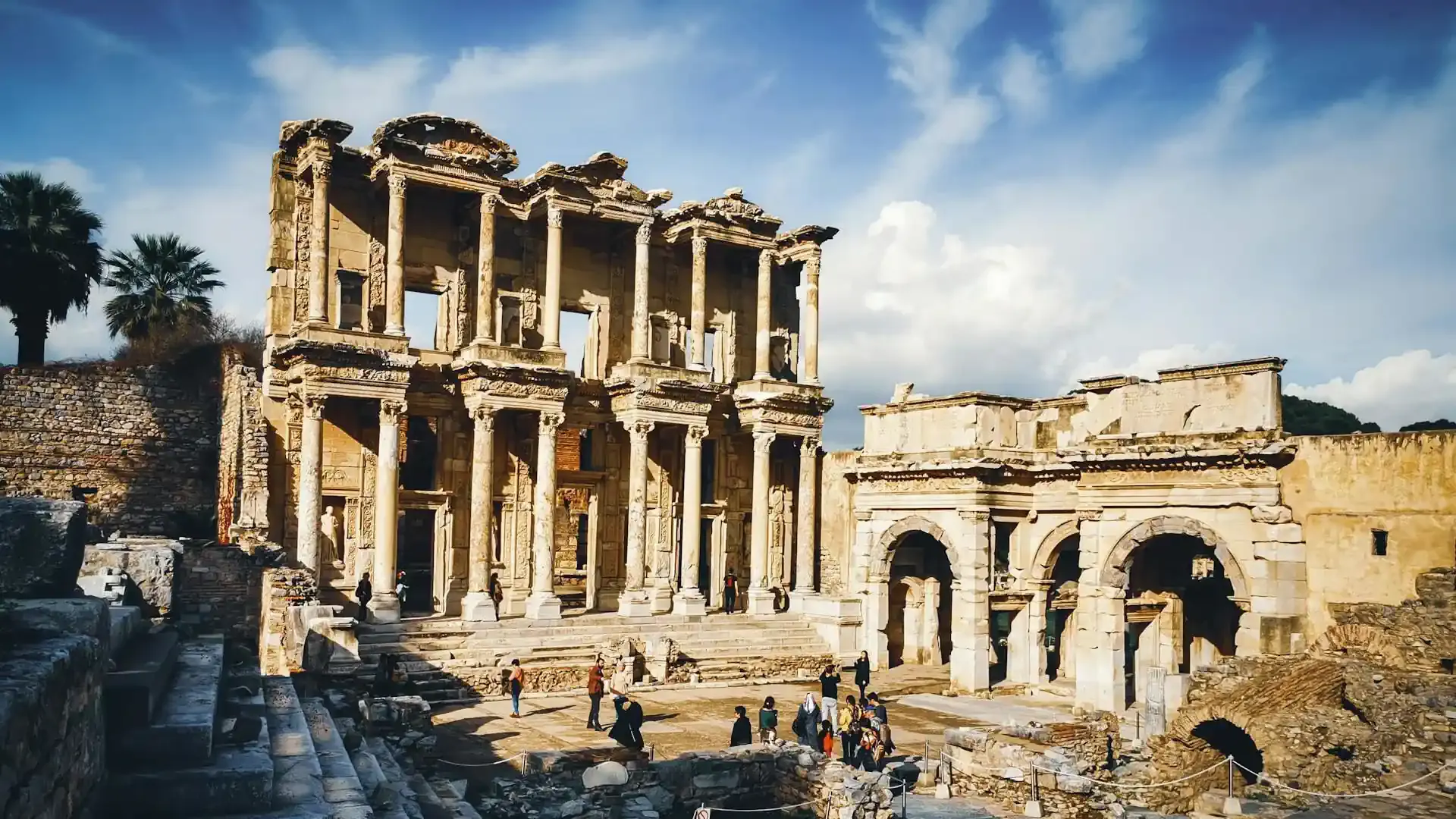
The Library of Celsus is the most stunning landmark in Ephesus. It was built in the 2nd century AD to honor the Roman consul Julius Celsus. You will see the crowds gathering mainly in front of its highly ornate facade. Behind it is the reading room with three tiers of wall niches. These “shelves” were designed to hold thousands of delicate scrolls and parchments before they were tragically lost to an ancient fire.
The Grand Theatre
A steep open air theater capable of hosting 24,000 spectators. Construction began during Hellenistic times and was expanded by the Romans in the 2nd century AD. The theater was a focal point for ancient drama, gladiator combats and major civic assemblies. It also acted as a forum where people made announcements and had political or philosophical discussions.
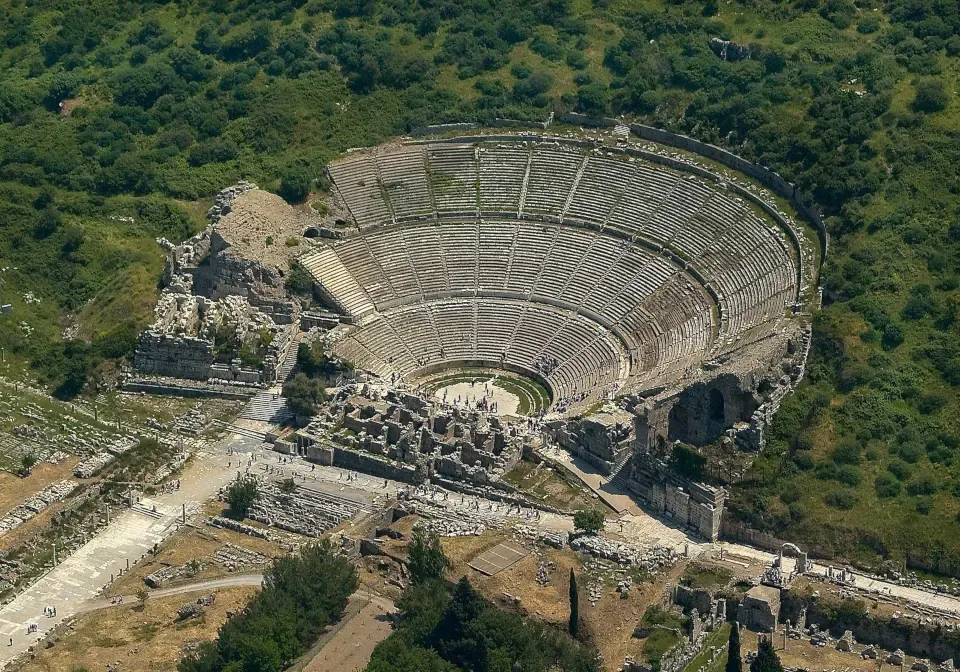
Capable of hosting 24,000 spectators, the Grand Theatre is one of the largest Hellenistic style structures in the ancient world.
The Church of the Virgin Mary
This building near the port used to serve as a maritime marketplace. It was converted by early Christians into a major church. This church famously hosted the Third Ecumenical Council in 431 AD, where key dogmas regarding the Virgin Mary were established.
The Temple of Artemis
The Temple of Artemis was one of the Seven Wonders of the Ancient World but unfortunately, very little remains of this once colossal sanctuary. The temple is located outside the ruins of the city, requires no entry ticket and is an easy stop to add to the end of your day.