The Grand Bazaar: Imperial Trade & Artistry
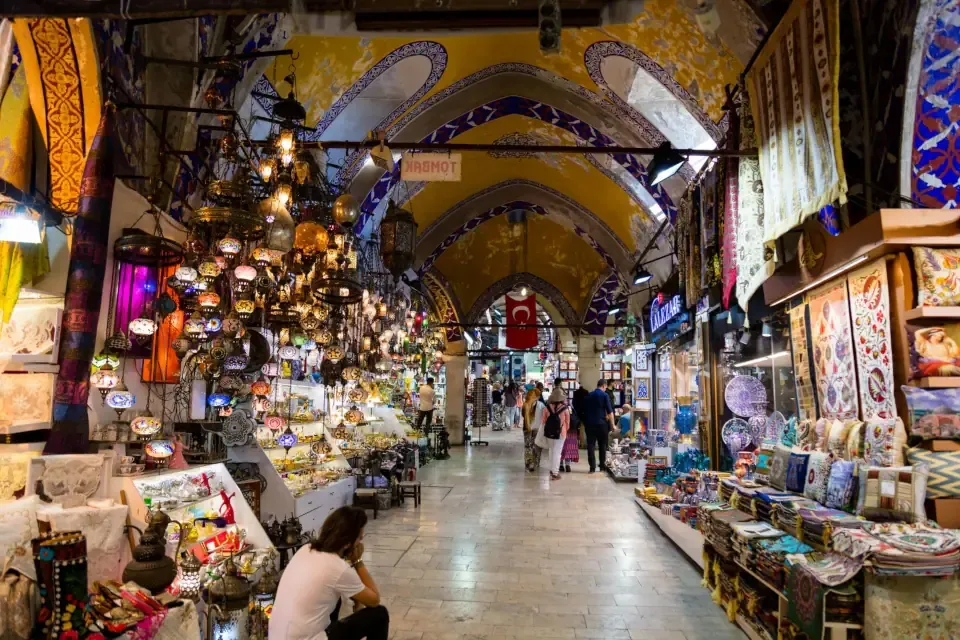
The Grand Bazaar was commissioned by Sultan Mehmed the Conqueror in 1461 shortly after the conquest of Constantinople. The market welcomed trade caravans along the Silk Road and has been the historic heart of Istanbul’s commercial soul for centuries. It remains one of the world’s most vibrant shopping destinations spanning over 30,000 square meters across 61 covered streets.
Highlights of the Grand Bazaar
The Historic Bedestens (Trading Halls)
At the center of the bazaar are two domed structures called bedestens:
- Cevahir Bedesten (Inner Bazaar): The oldest section of the market, traditionally housing rare antiques, vintage watches and estate jewelry.
- Sandal Bedesten: Originally designated for silk and luxury woven textiles, this monumental hall features 20 domed ceilings supported by stone piers.
Artisan Treasures & Shopping Culture
Visitors can wander the corridors historically organized by trade. Some of them are jewelers, rug merchants and leather artisans:
- Turkish Carpets & Kilims: Hand knotted silk, wool and cotton rugs crafted across Anatolia.
- Hand Painted Ceramics: Iznik style bowls, plates and tiles decorated with traditional flower motifs such as tulips and carnations.
- Mosaic Lanterns & Metalware: Intricate brass coffee sets, copper platters and glowing mosaic glass lamps illuminate every aisle.
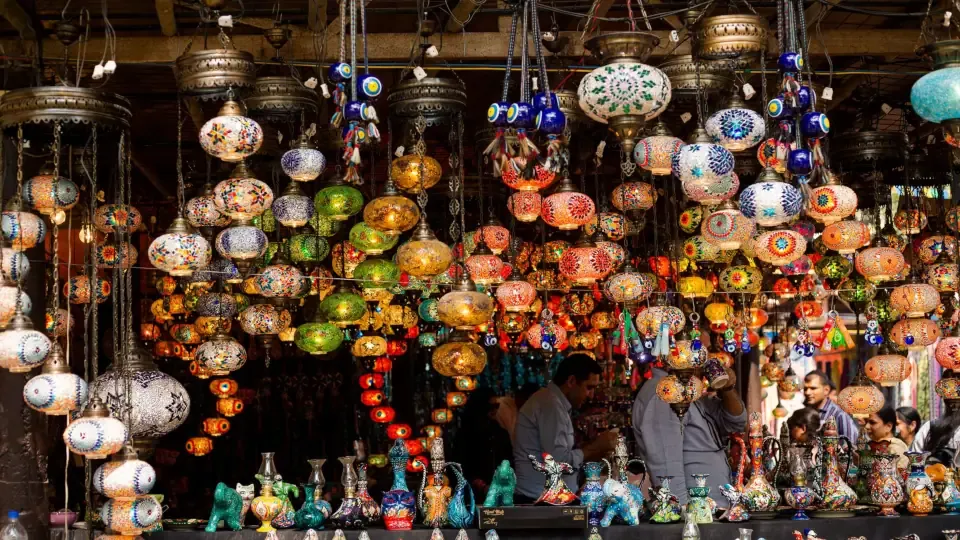
Artisan stalls offer Iznik tiles, mosaic glass lamps and kilims.
Courtyard Hans & Teahouses
Behind the main corridors, you can find open air courtyards known as hans (caravanserais). These courtyards house master goldsmiths, silver casters and carpet repairers away from the main bustle.
Practical Visiting & Bargaining Guide
Entering and visiting the Grand Bazaar which has 22 entrance gates is an adventure in itself. Main entry points include Nuruosmaniye Gate and Beyazit Gate.
Travel Tips & Etiquette:
- Art of Bargaining: Price negotiation is expected for non priced items. Start by politely offering 20% to 30% below the initial asking price.
- Sip Tea while Shopping: Accepting a glass of apple tea or Turkish tea from a shopkeeper is a gesture of hospitality and carries no obligation to buy.
- Hours & Days: Open Monday through Saturday from 8:30 AM to 7:00 PM. Closed on Sundays and major religious holidays.
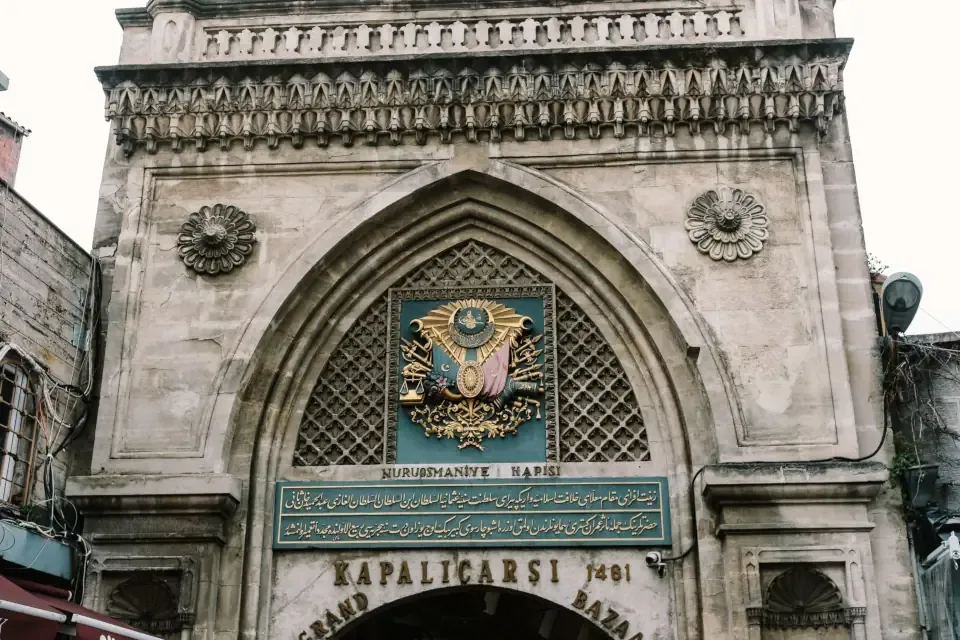
Nuruosmaniye Gate is one of 22 entrance gates leading into the vaulted market network.