Dolmabahce Palace: The Grand Ottoman Palace on the Bosphorus
Built with a heavy Western architectural influence, Dolmabahce Palace in Istanbul offers a window into the final chapters of the Ottoman royal family. This spectacular palace that stands along the Bosphorus waterfront marks the crossroads where the old imperial empire fell and the modern Republic of Turkey rose. Visitors today can find exquisite crystal chandeliers, gold leaf ceilings and peerless coastal views.
History of Dolmabahce Palace
Since the conquest of Istanbul, the royal family and the central structure of the Ottoman Empire lived in Topkapi Palace. The sultan wanted to move away from traditional Turkish nomadic roots and the pavilion style layout of the old palace. Sultan Abdulmecid I who was raised with a Western style education wanted to replicate European royal grandeur and commissioned this monumental project. The palace was on a filled in bay of the Bosphorus, which gave the palace its name, Dolmabahce (meaning “Filled Garden”).
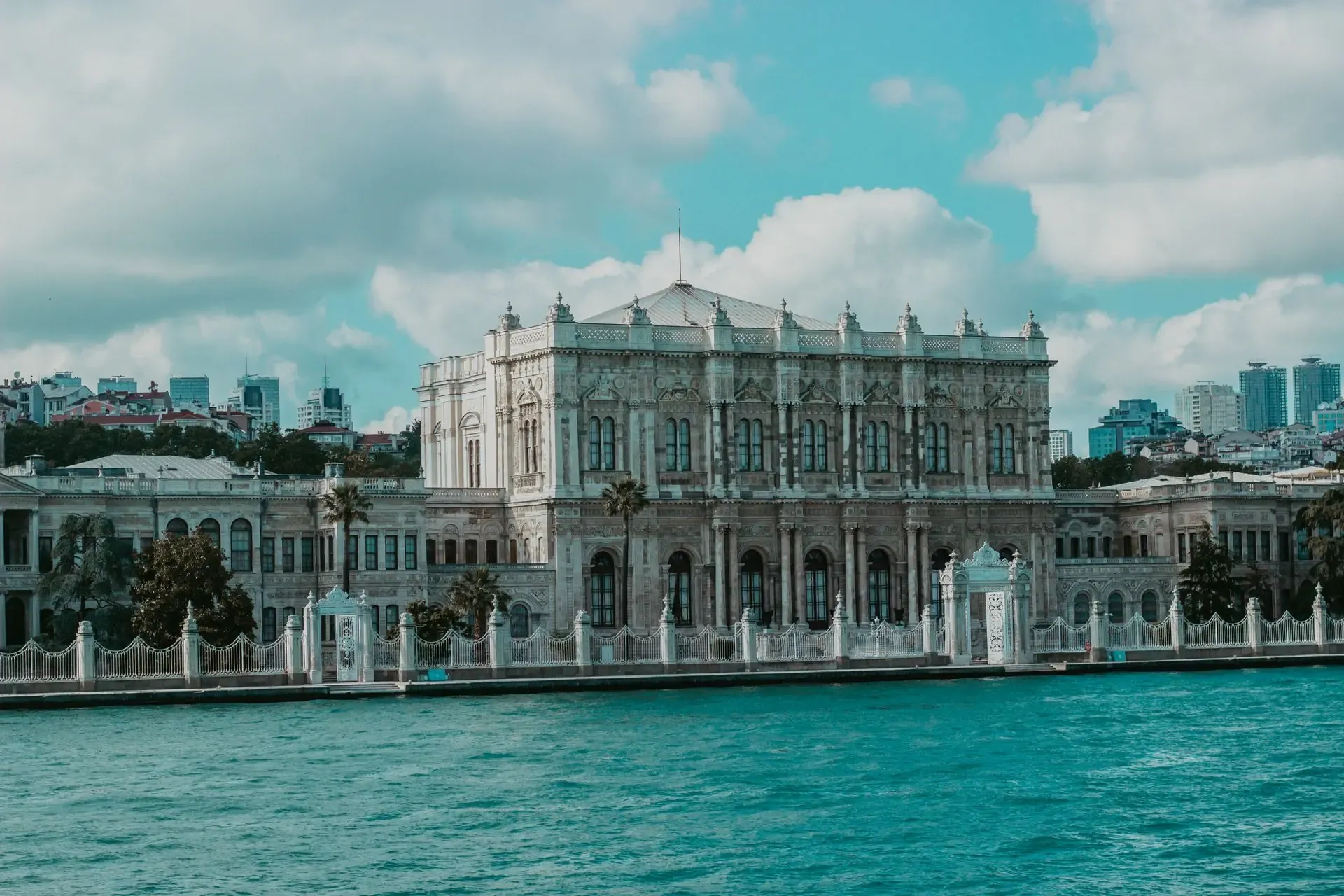
Constructed between 1843 and 1856, the palace reflects the empire's turn toward Western European architecture.
Architectural Features and Imperial Luxury
The palace blends traditional Ottoman layout elements with European Baroque, Rococo and Neoclassical styles. This massive estate features 285 rooms, 43 grand halls and 68 bathrooms. To style it, luxury materials were imported internally and globally: white marble from Marmara Island, colored marbles from Egypt, fine porcelain from China and giant Hereke silk carpets from Ottoman imperial workshops.
The palace grounds are split into three major sections:
- Mabeyn-i Humayun: The state administrative wing.
- Muayede Hall: The ceremonial and reception hall.
- The Harem: The private residential quarters of the royal family.
Courtyards, Gardens and Gates
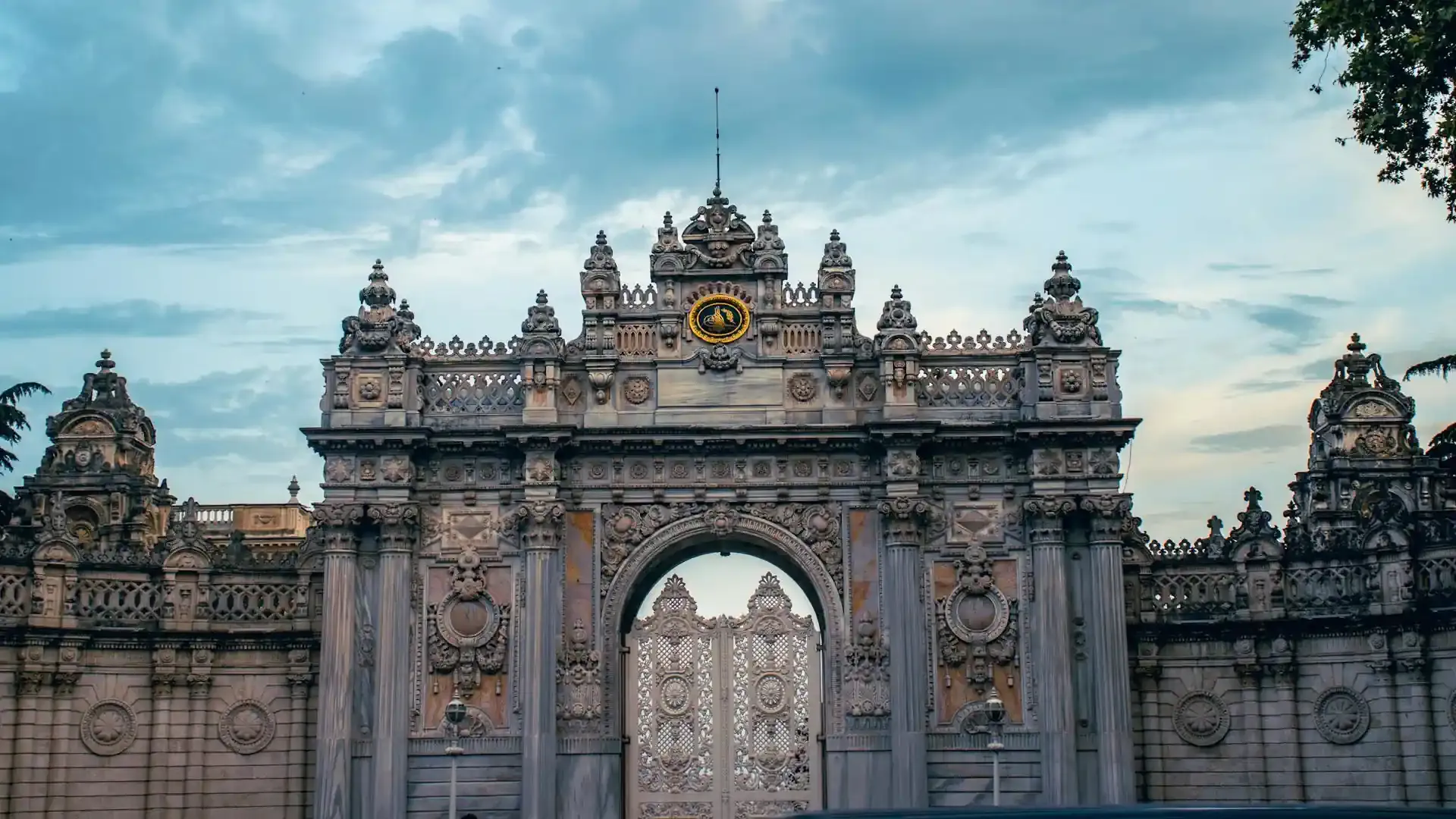
- Saltanat Gate: The main, ornate Rococo gate reserved exclusively for the Sultan as a symbol of royal authority.
- Treasury Gate: A monumental, six ton cast iron secondary entrance facing the land side.
- The Grand & Kusluk Gardens: Formal gardens featuring decorative swan fountains and historic aviary spaces that once housed exotic peacocks.
Mabeyn-i Humayun (The Administrative Wing)
This wing acted as the political powerhouse of the late empire. Guests were greeted in the Medhal Hall, illuminated by a 60 branch British crystal chandelier. Foreign diplomats were hosted in the stunning Sufera Hall (Ambassador’s Lounge), which features a white bear rug gifted by the Russian Tsar. Private political strategy happened in the green walled Porphyry Room, while the Library and Caliphate Room marks the exact spot where the last Ottoman Caliph was formally notified of the dynasty’s exile after the declaration of the Republic.
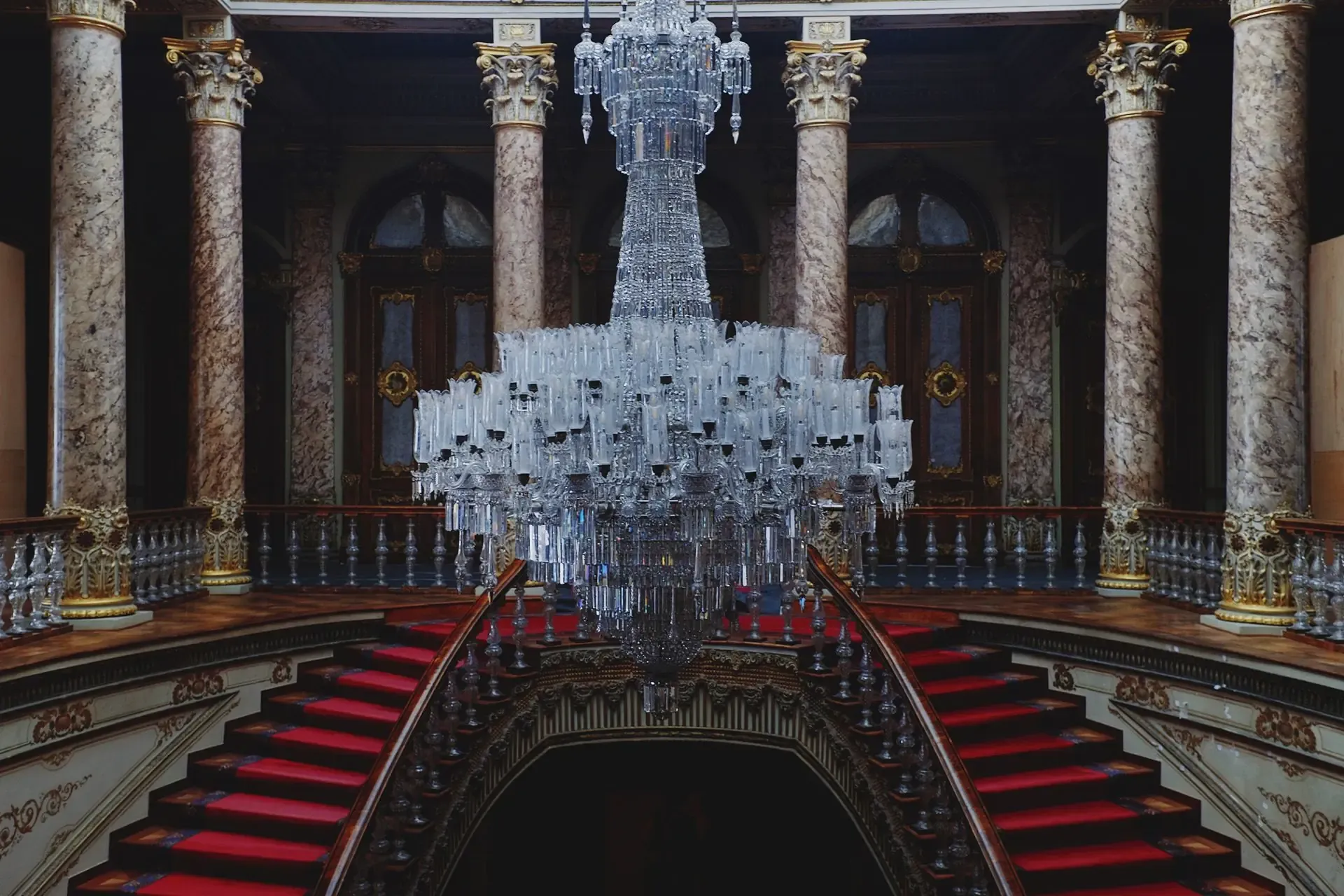
The palace hosted foreign dignitaries under soaring, gold leaf ceilings and crystal chandeliers.
Muayede Hall (The Ceremonial Hall)
This central hall has 56 pillars supporting a massive 36 meter high dome. A five ton Baccarat crystal chandelier featuring 750 individual lights hangs from its center. During holidays, the golden imperial throne was positioned here. Decades later, the hall held the official catafalque of Mustafa Kemal Ataturk in 1938, where thousands of mourning citizens paid their final respects before his final journey to Ankara.
The Harem (Private Quarters)
Just like the old palace, the Sultan’s family had their private section of the palace. The Blue Lounge hosted coronations and religious celebrations for the women of the court. The wing also houses royal baths built out of transparent Egyptian alabaster. This section also contains Chamber of Ataturk. Mustafa Kemal Ataturk, the founder of modern Turkey, used this room during his final days and passed away here on November 10, 1938. The clocks in this room remain permanently set to 9:05 AM, the exact time of his passing.
Surrounding Complex Landmarks
Dolmabahce Mosque
This unique mosque resembles a classic European church layout due to its Baroque styling with slender minarets. It was commissioned by the Sultan’s mother, Bezmialem Sultan, and completed in 1855.
The Clock Museum
This building used to be the palace’s old heavily guarded treasury building. Today, this museum displays a beautifully preserved collection of historic Ottoman and European timepieces.