Pamukkale: Thermal Pools & Ancient Hierapolis
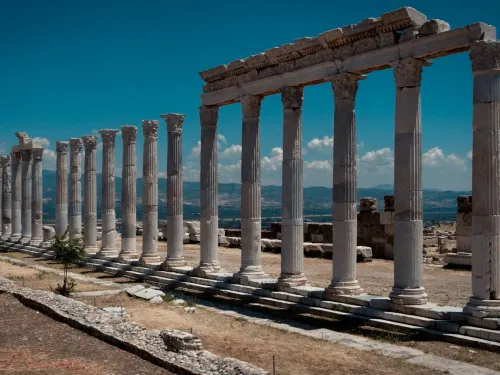
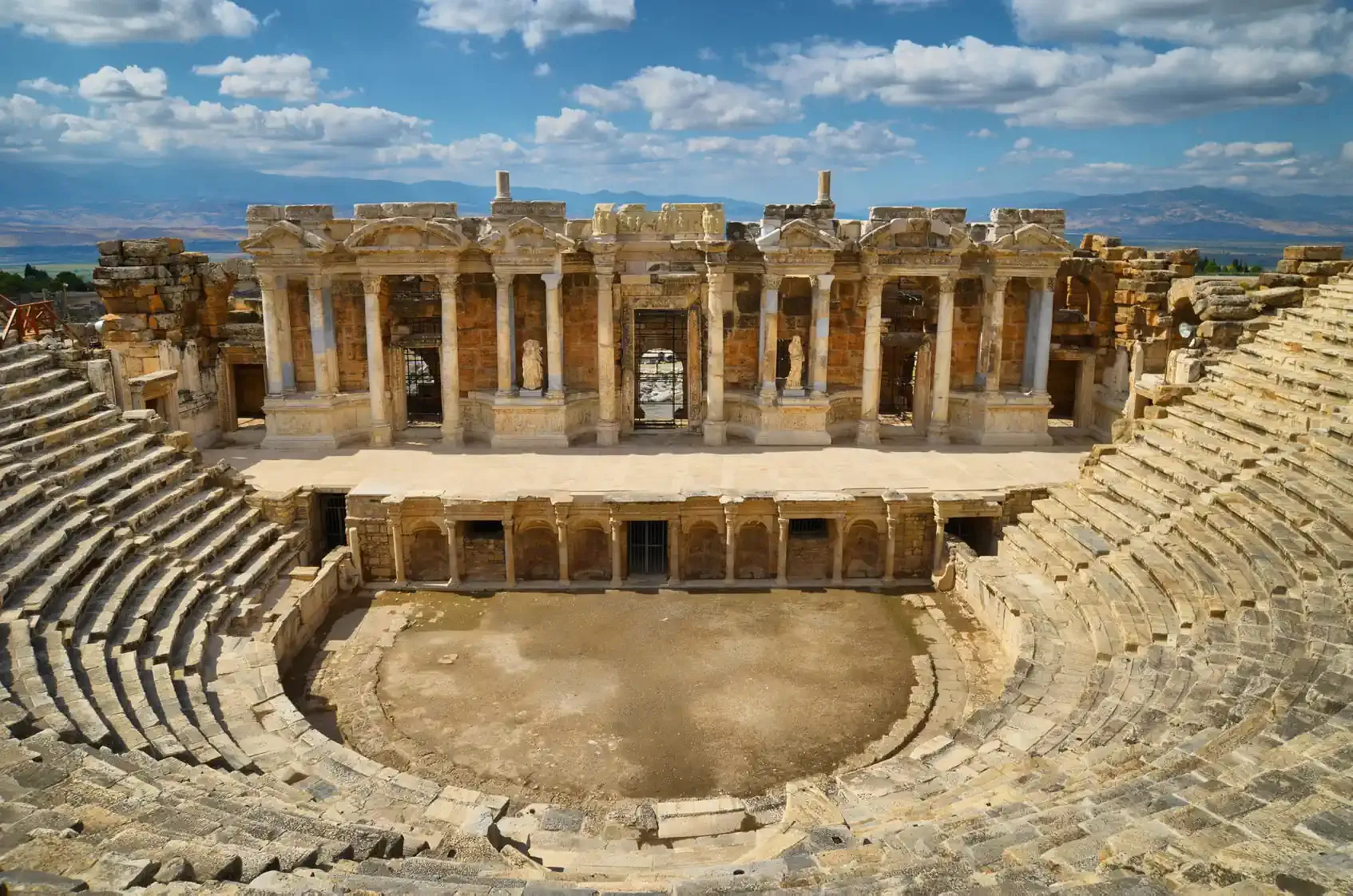
Pamukkale is a breathtaking natural wonder famed for its thermal pools. It is also known as the “Cotton Castle” because of its white travertine terraces where the pools have formed naturally. Above these hot springs is the ancient city of Hierapolis. It houses a well preserved theater and the largest ancient necropolis (cemetery with sarcophagi) in Turkey.
What Makes the Cotton Castle Special?
The famous terraces of Pamukkale are sculpted by mineral rich spring water emerging at 95°F (35°C). As the water flows down and loses carbon dioxide, it leaves behind thick layers of calcium carbonate which hardens on the surface of the rocks. Visitors are permitted to walk along a designated section of these travertines and natural pools.
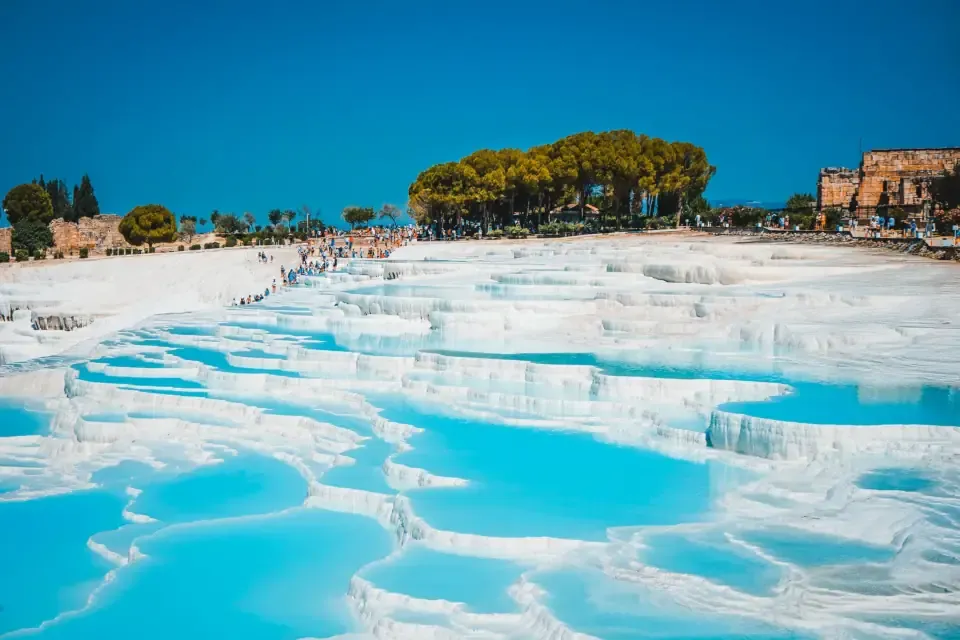
The white terraces are formed by a constant deposition of calcium carbonate.
The Ancient City of Hierapolis
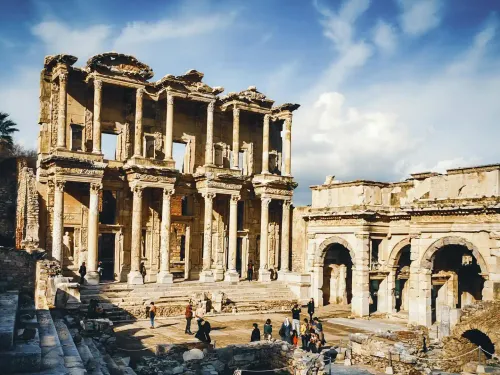
Hierapolis was a popular health and wellness destination in the ancient times. The city attracted wealthy Roman citizens to its therapeutic thermal baths. The archaeological site features an ancient theater and a Necropolis containing over 1,200 historic tombs. As the city was known with its healing powers, it also houses a Temple of Apollo who was closely related to matters of healing. Beneath the sanctuary of Apollo is a cave which was the spot of the first holy altar of the city. The fissures emit lethal toxic gases in this cave and ancient priests used this to show to the public they were chosen by the gods by staying in the lethal cave for extended periods of time but in reality using safe spots with pockets of fresh and breathable air.
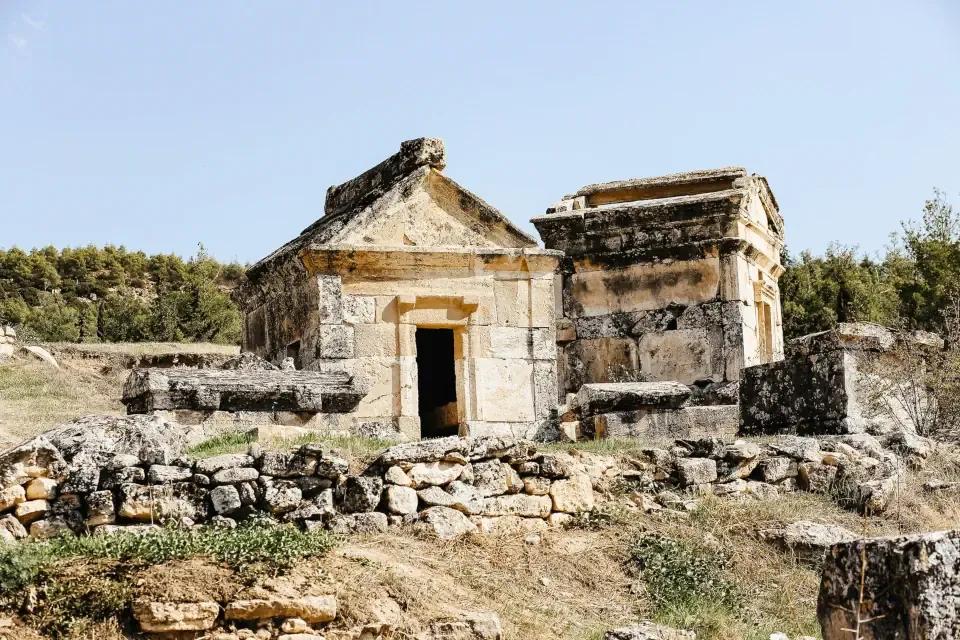
Hierapolis features the largest ancient cemetery in Turkey, home to over 1,200 historic graves.
Location, Gates, and Climate
Pamukkale is situated 13 miles (20 kilometres) from the major city of Denizli, which features an airport offering flights to Istanbul. Most of the accommodation options can be found in the small town beneath the ruins or the nearby town named “Karahayit” which is located 4 miles (6 kilometers) away.
When planning your visit, you can choose between two main ticket gates under a single museum entry fee:
- The Northern Gate: Located closer to Karahayit, this entrance is optimal for travelers who want to explore the Necropolis and city ruins thoroughly before heading to the water features. Remember, if you wish to visit the entire ancient city, it doesn’t matter which entrance you use.
- The Southern Gate: This entryway provides immediate access to the white travertine pools for those prioritizing a visit to the natural pools and central ruins.
Regional Climate Details: Summer temperatures are typically hot, ranging from 85°F to 105°F (30°C to 40°C), while winter months drop down to 35°F to 55°F (2°C to 12°C).