Ancient City of Pergamon
Pergamon was once the brilliant capital of the Hellenistic Attalid Dynasty and an important cultural center of the Roman Empire. This UNESCO World Heritage site is an important archaeological complex in the Mediterranean with its medical school.
Highlights of Pergamon
The Upper Acropolis & Library
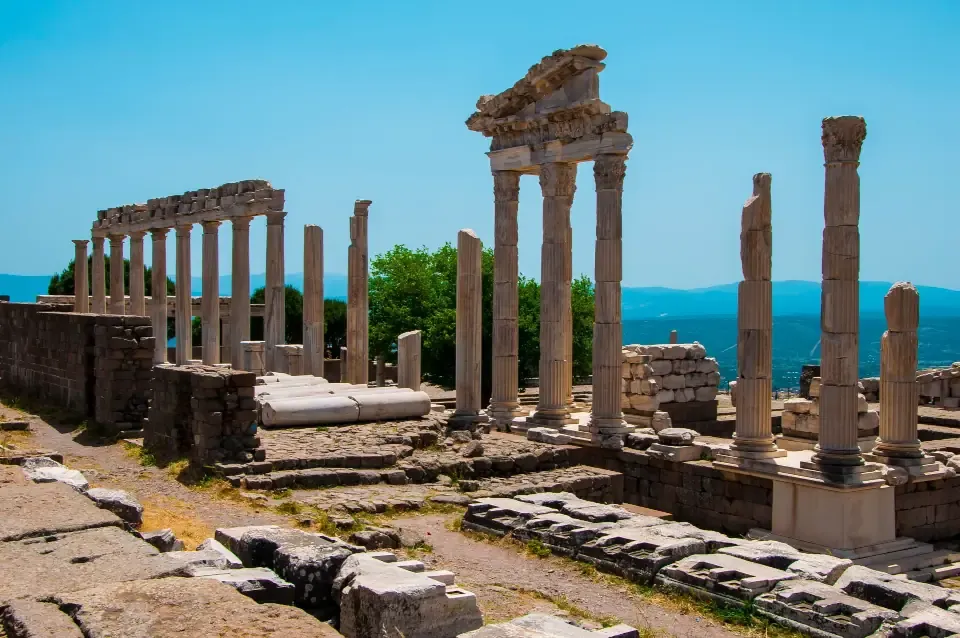
On the hills above modern city Bergama is the Acropolis of Pergamon. This was the center of the ancient city built over 900 feet (300 meters) above the valley floor. Royal palaces, the Temple of Trajan with its restored white marble columns and the foundations of the famed Altar of Zeus can be found here. Pergamon was home to a library that contained over 200,000 parchment scrolls. The city also gave birth to the word parchment (pergamena).
The Steepest Ancient Theater
Another famous landmark of the Acropolis is the 10,000 seat Hellenistic Theater. It was constructed in the 3rd century BC at a 70 degree angle. The steep theater that overlooks the valley provides spectacular views of the surrounding landscape.
Directly below the theater is a 800 feet long (248 meters) paved road that once led to the Temple of Dionysus.
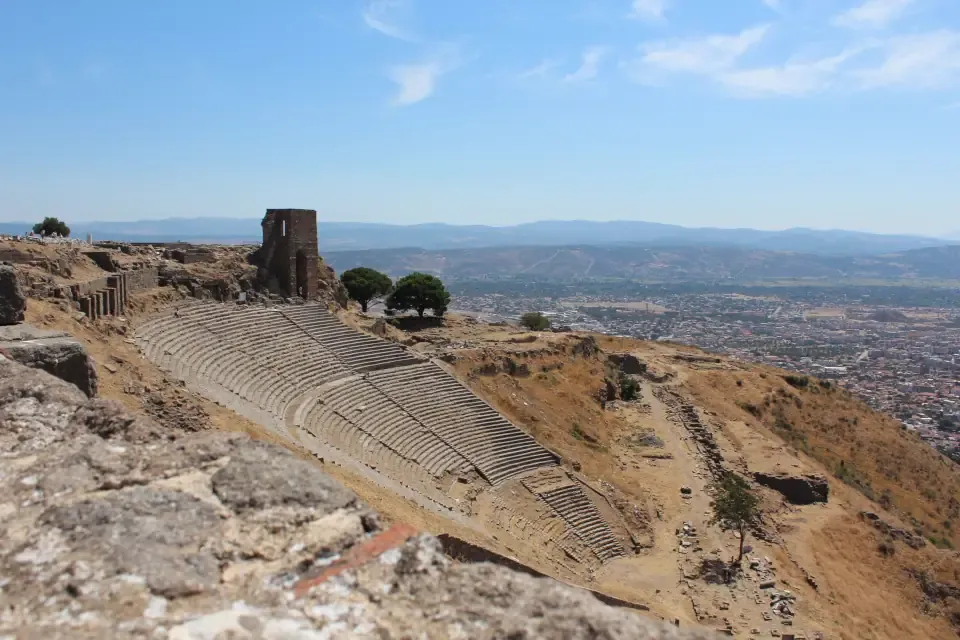
Engineered into a steep mountain slope, Pergamon's 10,000 seat theater is the steepest in the classical world.
The Asklepion: Cradle of Ancient Medicine
Asklepion was one of the Greco Roman world’s most celebrated medical centers. This center of healing was dedicated to Asklepios, the god of healing. Patients visited this sanctuary for treatments by famous physicians like Galen. Visitors today can walk through tunnels where spring water runs along the sides, explore the circular treatment temple and see the marble column carved with entwined serpents, a symbol that remains the global emblem of medicine to this day.
Practical Travel Tips:
- Transit: Located about a 1.5 hour drive (110 km / 68 miles) north of central Izmir. You can take the IZBAN train to Aliaga station and transfer to the Bergama bus.
- Cable Car Access: A modern cable car brings visitors from the base of Bergama town directly up to the Acropolis entrance in a few minutes.
- Seasonality: Open year round. Spring (April-May) and Autumn (September-October) offer comfortable temperatures for outdoor exploring. Summer temperatures regularly exceed 95°F (35°C), making morning visits ideal. Make sure to bring a windbreaker if you’re visiting during autumn or winter months.