Cave Church of Saint Peter

This church is one of the world's earliest places of Christian worship. The church was not built but rather 'carved' into the rocky cliffs. This is the spot where people who believed in Christ were first called "Christians".

Explore recommended itineraries, schedules and pricing to help plan your visit to Hatay.

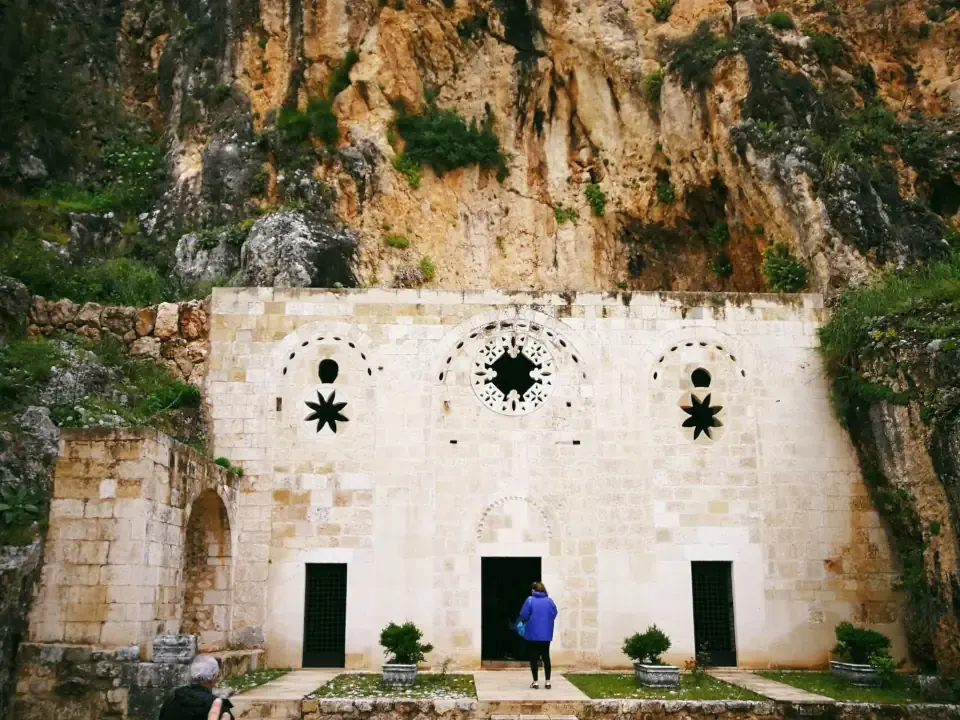
Gothic stone arch facade of the Cave Church of Saint Peter carved into Mount Staurin cliffside in Hatay

Gothic stone arch facade of the Cave Church of Saint Peter carved into Mount Staurin cliffside in Hatay

Distilled Information

Cave Church of Saint Peter

One Sentence Review

"An ancient cave sanctuary featuring 4th century floor mosaics, a holy spring and Christian history."

Ticket Price

8 Euros (updated 2026)

Accessibility

Ramped stone pathway leads from the parking visitor center up to the cave entrance. Inside the natural cavern, the stone floor is flat and paved.

Location & Logistics

Located 1.2 miles (2 kms) northeast of central Antakya (Hatay), along the lower slopes of Mount Staurin (Hac Dagi).

Cave Church of Saint Peter

The Cave Church of Saint Peter holds a monumental place in world religious history. Saint Peter, who was one of Jesus’s twelve apostles, gathered early believers inside this natural grotto between 47 and 54 AD. It was here in ancient Antioch that the followers of Jesus were officially referred to as “Christians” for the very first time in history according to Acts 11:26. It states: at Antioch the disciples were first named Christians.


Highlights of the Sanctuary

The Crusader Facade & Natural Cavern

The site was originally a natural cave used by early Christians seeking refuge from Roman persecution. Crusaders in the 12th century expanded the church by constructing the two arched stone facade that encloses the cave entrance today. A stone altar and a marble statue of Saint Peter were added in 1932.


Mosaics, Holy Springs & Tunnels

Exploring the interior reveals several historical layers:

  • 4th Century Floor Mosaics: Traces of geometric floor mosaics dating back to the 4th and 5th centuries remain visible on the cave floor.
  • The Holy Spring: Water dripping through the rock ceiling was collected in a stone basin and used for baptisms for centuries.
  • Escape Tunnel: A narrow tunnel carved into the rear cave wall allowed early Christians to escape during Roman raids.

Papal Recognition & Annual Pilgrimage

In 1963, Pope Paul VI declared the Cave Church of Saint Peter an official place of pilgrimage for the Catholic Church. Every year on June 29th, a special international service is held at the church to commemorate Saint Peter’s Feast Day.


Location & Practical Visiting Guide

The Cave Church of Saint Peter is located about 1.2 miles (2 km) northeast of central Antakya (Hatay city center).

Practical Travel Tips:

  • How to Get There: Easily reached via a 5 minute taxi ride or local minibus heading toward Reyhanli from central Antakya.
  • Museum Pass: The site is managed by the Turkish Ministry of Culture and Tourism; Turkish Liras and credit cards are accepted.
  • Combining Nearby Sites: After exploring the church, visit the nearby Hatay Archaeological Museum to view a collection of Roman floor mosaics.

Got Questions?
We're here to help!

Frequently Asked Questions

What is the Cave Church of Saint Peter famous for?

The Cave Church of Saint Peter in Antakya is considered one of the oldest Christian places of worship in the world. It is famous as the spot where Saint Peter preached to the early church and where the followers of Jesus were first called 'Christians'.

Where is the Cave Church of Saint Peter located and how do you get there?

It is carved into the slopes of Mount Starius, located roughly 2 kilometers outside Antakya. Visitors can easily reach the site via taxi, private car or local tour from the city center.

What can you see inside the cave church?

Inside the sanctuary, visitors can see an 11th century Crusader facade, remnants of ancient floor mosaics, a marble statue of Saint Peter, a stone altar used for modern ceremonies and a narrow escape tunnel carved into the mountain.

When is the best time of year to visit?

Spring (April to June) and autumn (September to November) offer the most comfortable temperatures for exploring Hatay. Morning visits are recommended to enjoy the site before mid day heat and tour groups arrive.

You May Also Want To Visit