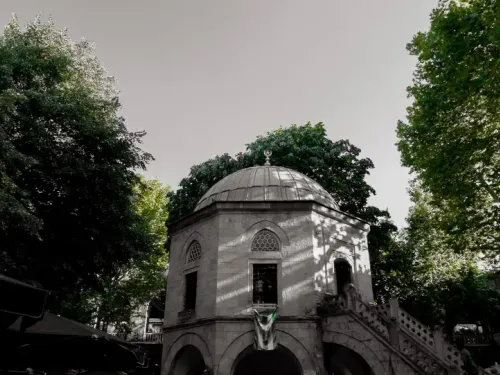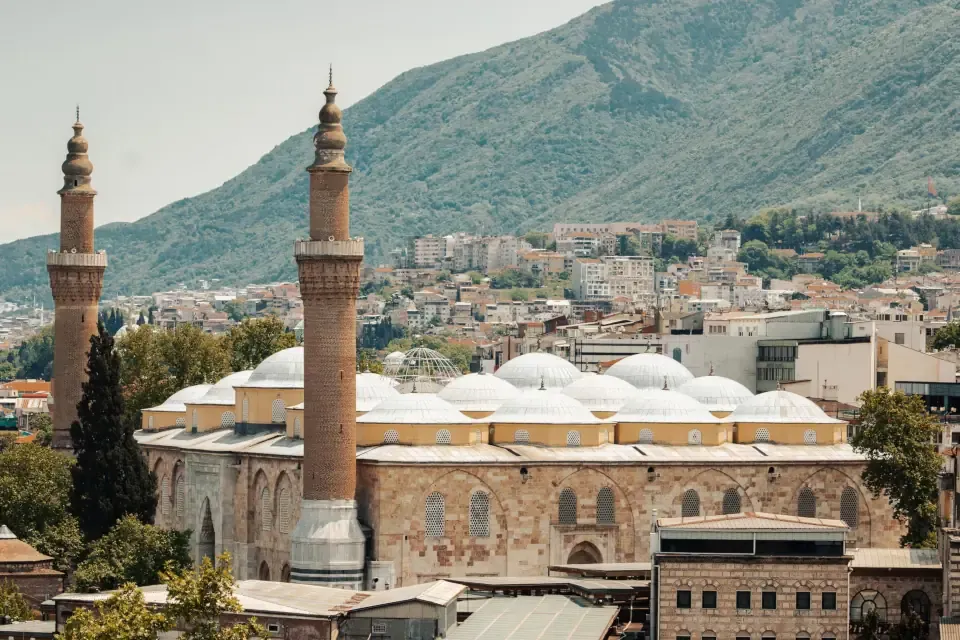
Bursa Grand Mosque (Ulu Cami): Mosque With Twenty Domes
The Bursa Grand Mosque (Ulu Cami) was built in 1399 while the city of Bursa was still the capital of the Ottoman Empire. Early Ottoman architecture used reflect the classical Seljuk hypostyle design (roof supported by columns) before the development of single massive domes.
Architectural Highlights of Ulu Cami
The Twenty Domes
After winning a mjaor battle, Sultan Bayezid I vowed to build twenty separate mosques. His religious advisors suggested constructing a single grand mosque with twenty massive domes to show his faith and demonstrate the might of the empire at the same time. This grand interior creates an expansive space for worship.
The Indoor Marble Fountain
One of the most distinctive features of Bursa Grand Mosque is the marble ablution fountain. These ablution fountains are usually found outside the mosque building inside the courtyard. In the Bursa Grand Mosque, it is located inside the prayer hall and creates an acoustic atmosphere in the vast hall of the mosque.
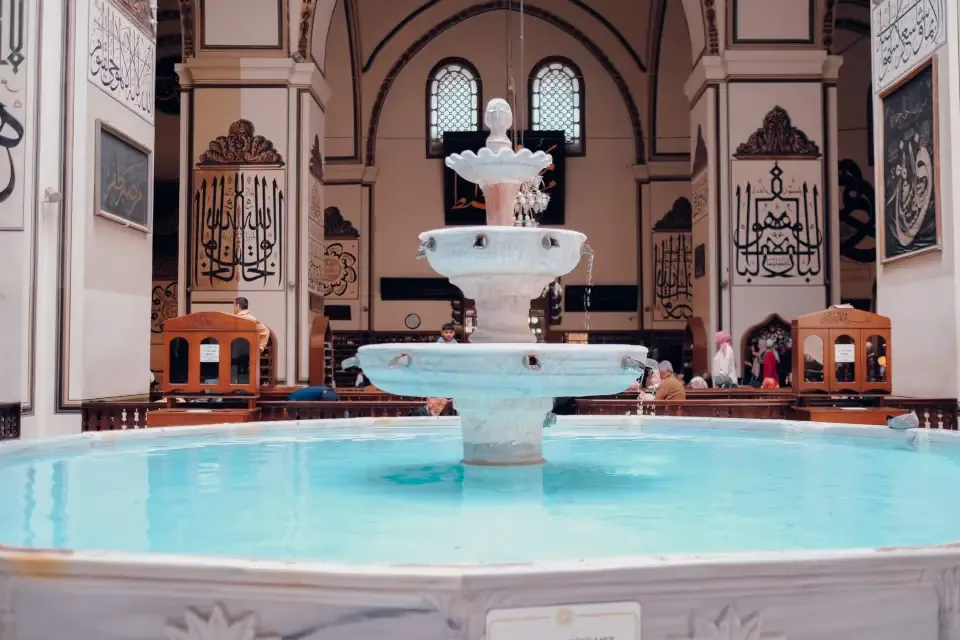
The indoor marble fountain (Sadirvan) in the center of the prayer hall.
Masterpieces of Islamic Calligraphy
Bursa Grand Mosque is like a museum of Islamic sacred art. The interior walls and massive stone pillars feature over 192 calligraphy inscriptions created by famous Ottoman calligraphers. As worship of images or idols are condemned in the Quran, instead of depicting live subjects, the Muslims expressed themselves through different styles of art using circular medallions, mirror writing and stylized depictions of the Kaaba.
The Carved Walnut Minbar
The mosque’s pulpit (minbar) is a classic Seljuk style woodwork. This was crafted from solid walnut using an interlocking technique called kunkari which doesn’t use nails or glue. The intricate geometric carvings on the side panels are believed to represent a scale diagram of the Solar System.
Visiting Guidelines & Practical Information
As an active house of worship, visitors are welcome outside of daily prayer times.
- Dress Code: Modest attire is required. Shoulders and knees must be covered. Women must cover their hair with a scarf (scarves are available at the entrance). Shoes must be removed before stepping onto the carpeted prayer floor.
- Entry & Hours: Open daily with free admission. Avoid visiting during Friday congregational prayers (midday) when tourism entry is restricted.
- Location: Surrounded by the historic bazaars and authentic kebab restaurants.
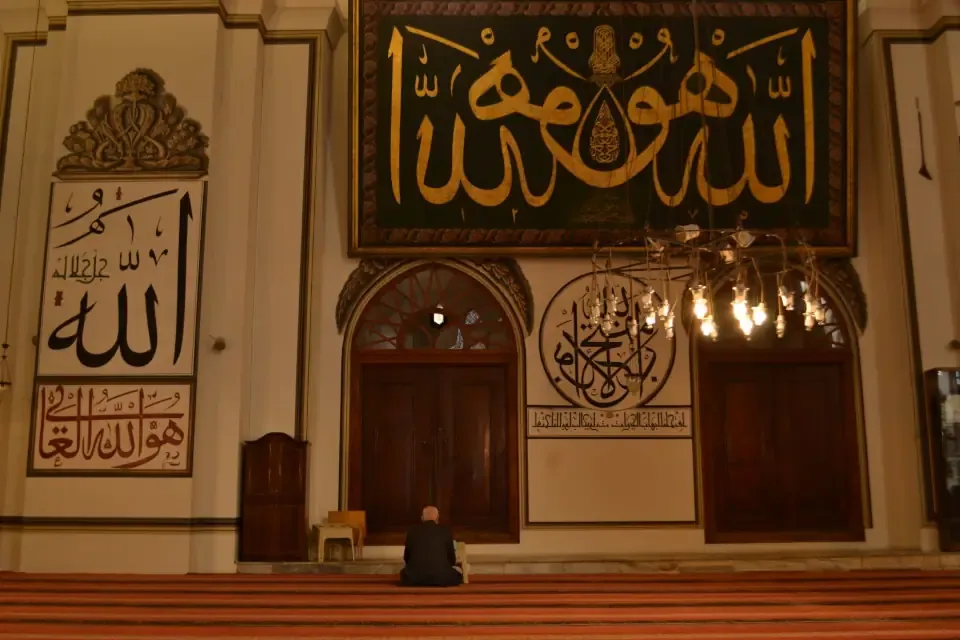
Over 190 calligraphy inscriptions adorn the interior walls.