Ancient City of Sagalassos
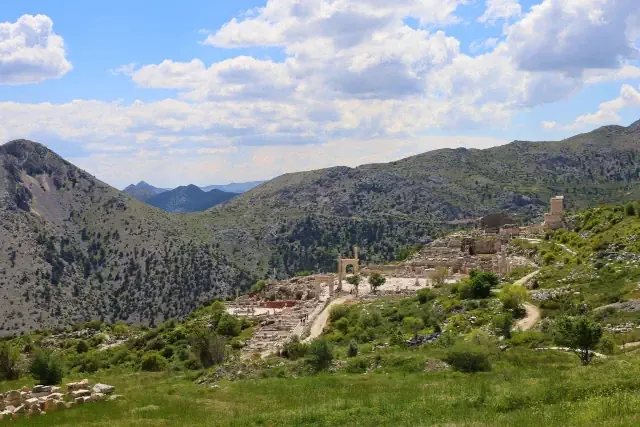
Sagalassos was built on the slopes of Mount Akdag at an altitude of over 4,600 feet (1,400 meters). The city is a spectacular high altitude archaeological site in Turkey. It was an important city in ancient Pisidia which kept on flourishing under Roman rule. Due to its remote location, the remains are remarkably well preserved.
What Makes Sagalassos Special?
Sagalassos is carved directly into the mountain range and provides fantastic views of the valley below. The buildings showcasing Roman engineering and artistic achievements are also well preserved.
The Antonine Nymphaeum
The most famous monument of Sagalassos is the Antonine Nymphaeum. It is 2nd century AD fountain that was excavated and reassembled by archaeologists. For Romans, the fountains were not only important as functional buildings. These were an opportunity to show the superiority of Roman engineering, design and art. The fountain which is 28 meters wide features ornate stone niches, statues and a central waterfall fed by a mountain spring.
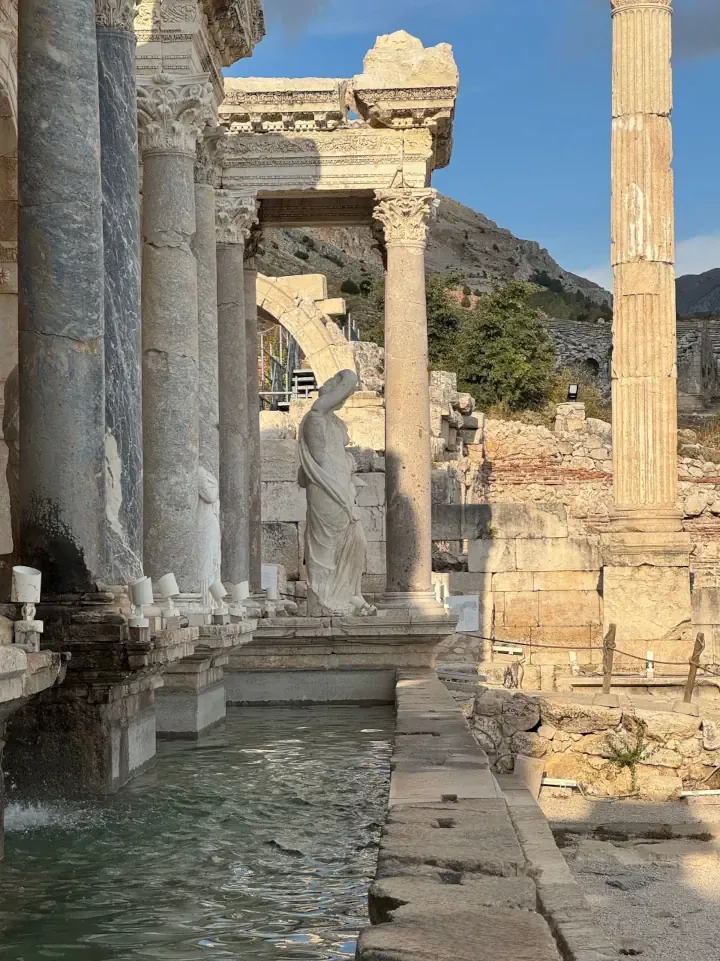
The Antonine Nymphaeum, fully restored with its original spring water source active.
Sagalassos was conquered by Alexander the Great in 333 BC. The city later became the chief city of Pisidia under Emperor Augustus. Some of the ruins that can be visited are the Upper and Lower Agora, public baths, a Heroon (hero’s monument) and imperial sculptures of Hadrian and Marcus Aurelius, now housed in the nearby Burdur Museum.
High Mountain Setting
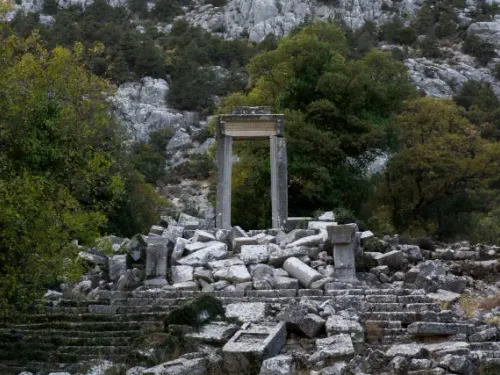
Sagalassos boasts one of the world’s highest classical theaters, capable of seating 9,000 spectators. Although sections of the theater are not restored, visitors can still see the original stones in place both in the seating area and the scene building which is mostly in ruins.
Practical Travel Tips:
- Transit: Located approximately 1.5 to 2 hours (110 km / 68 miles) north of Antalya. It makes an ideal day trip from the coast or a stopover when driving toward Pamukkale.
- Seasonality: Due to its elevation, Sagalassos is significantly cooler than coastal Antalya. Summer (June-September) offers pleasant warm weather (68°F-86°F / 20°C-30°C). Late autumn through early spring often brings snow and cold winds, making warm layers essential.